Monday, January 19, 2026

Answers to yesterday's Bee

Jump to answers for


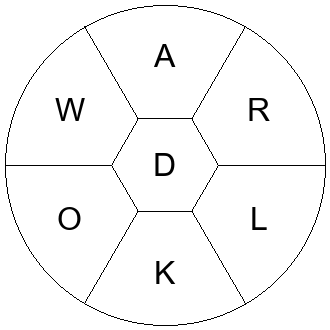
The official answers for today's puzzle are:

Click on the arrow to show the definition.
Click outside the pop-up to close it.


Number of Pangrams: 1

Maximum Puzzle Score: 118

Number of Answers: 31

Points Needed for Genius: 83

Genius requires between 12 and 28 words. You need at least a 7-letter word to reach genius. If you don't get the pangram, you need 81% of the total points to reach genius. If you get the pangram, you only need 66% of the remaining points to reach genius.

Other days with this pangram:

The button below will reveal a chart with the number of words by each letter. Red bars indicate that there is a pangram(s) starting with that letter.


How does this puzzle compare to other puzzles?

Today's score of 118 was in the 22nd percentile of all puzzles.
The last time there was a score this low was on January 2, 2026.
The highest score ever was 537 on January 22, 2021.
The lowest score ever was 47 on March 27, 2023.

This puzzle's 31 possible answers rank it in the 27th percentile of all puzzles.
The last time there were fewer answers than this was on January 11, 2026.
The highest number of answers was 81 on June 8, 2019.
The lowest number of answers was 16 on March 27, 2023.

It takes a 7-letter word for genius.
The last time this happened was on January 12, 2026.

Today's puzzle has an average word length of 5.0.
For all Bees, the average word length has been 5.3.


Haven't I seen these letters before?

Hover over a letter to see its first and most recent appearance in the Bee!


Haven't I seen these words before?

The most common words in the Bee are:

  • noon 227
  • loll 210
  • toot 207
  • naan 189
  • nana 189
  • lilt 151
  • till 151
  • tilt 151
  • nene 148
  • tint 145
  • mama 142
  • mamma 142
  • acacia 137
  • acai 137
  • onion 137
  • onto 136
  • toon 136
  • anal 129
  • anon 128
  • olio 124
  • dodo 121
  • tact 121
  • papa 120
  • baba 119
  • boob 117
  • booboo 117
  • poop 117
  • lull 116
  • lulu 116
  • cocci 114
  • call 113
  • calla 113
  • mitt 113
  • mono 112
  • moon 112
  • tutu 112
  • ratatat 111
  • tart 111
  • tartar 111
  • tattoo 111
  • attar 110
  • allay 109
  • ally 109
  • loon 109
  • tatty 108
  • ammo 107
  • momma 107
  • epee 104
  • meme 104
  • peep 104


How long are words in the Bee?

There have been 112,466 answers ever accepted in the Bee - with 10,897 unique words.
Below are the distributions of the lengths of these words.


Valid dictionary words not in today's official answers

You may be wondering why these words aren't here*:

  • aldol
  • allod
  • arrowwood
  • dada
  • dado
  • dawk
  • doodoo
  • dorr
  • koodoo
  • orad
  • ordo
  • woad
  • woald
  • wold
  • woodlark

*Because the New York Times considers them obscure or offensive.

ardor

noun
  1. Great warmth of feeling; fervor; passion.
  2. Spirit; enthusiasm; passion.
  3. Intense heat.

award

noun
  1. A judgment, sentence, or final decision. Specifically: The decision of arbitrators in a case submitted.
  2. The paper containing the decision of arbitrators; that which is warded.
  3. A trophy or medal; something that denotes an accomplishment, especially in a competition. A prize or honor based on merit.
  4. (Australia, NZ, industrial relations) A negotiated minimum wage that is set for a particular trade or industry; an industrial award.
verb
  1. To give by sentence or judicial determination; to assign or apportion, after careful regard to the nature of the case; to adjudge
  2. To determine; to make or grant an award.
  3. To give (an award).
  4. To give (a person) an award.

awkward

noun
  1. Someone or something that is awkward.
adjective
  1. Lacking dexterity in the use of the hands, or of instruments.
  2. Not easily managed or effected; embarrassing.
  3. Lacking social skills, or uncomfortable with social interaction.
  4. Perverse; adverse; difficult to handle.
adverb
  1. In a backwards direction.

dark

Etymology 1

adjective
  1. Having an absolute or (more often) relative lack of light.
  2. (of colour) Dull or deeper in hue; not bright or light.
  3. Hidden, secret, obscure.
  4. Without moral or spiritual light; sinister, malign.
  5. Conducive to hopelessness; depressing or bleak.
  6. Lacking progress in science or the arts; said of a time period.
  7. With emphasis placed on the unpleasant aspects of life; said of a work of fiction, a work of nonfiction presented in narrative form or a portion of either.

Etymology 2

noun
  1. A complete or (more often) partial absence of light.
  2. Ignorance.
  3. Nightfall.
  4. A dark shade or dark passage in a painting, engraving, etc.

Etymology 3

verb
  1. To grow or become dark, darken.
  2. To remain in the dark, lurk, lie hidden or concealed.
  3. To make dark, darken; to obscure.

dodo

Etymology 1

noun
  1. A large, flightless bird, †Raphus cucullatus, related to the pigeon, that is now extinct (since the 1600s) and was native to Mauritius.
  2. A person or organisation which is very old or has very old-fashioned views or is not willing to change and adapt.

Etymology 2

noun
  1. Fried plantain.

doll

noun
  1. A toy in the form of a human.
  2. (sometimes offensive) An attractive young woman
  3. A term of endearment: darling, sweetheart.
  4. A dollar.
  5. (now possibly offensive) A good-natured, cooperative or helpful girl.
  6. The smallest or pet pig in a litter.

dollar

noun
  1. Official designation for currency in some parts of the world, including Canada, the United States, Australia, New Zealand, Hong Kong, and elsewhere. Its symbol is $.
  2. (by extension) Money generally.
  3. A quarter of a pound or one crown, historically minted as a coin of approximately the same size and composition as a then-contemporary dollar coin of the United States, and worth slightly more.
  4. Imported from the United States, and paid for in U.S. dollars. (Note: distinguish "dollar wheat", North American farmers' slogan, meaning a market price of one dollar per bushel.)

dolor

noun
  1. Sorrow, grief, misery or anguish.
  2. A unit of pain used to theoretically weigh people's outcomes.

doodad

noun
  1. A thing (used in a vague way to refer to something whose name one cannot recall); especially an unspecified gadget, device, or part.

door

noun
  1. A portal of entry into a building, room, or vehicle, consisting of a rigid plane movable on a hinge. Doors are frequently made of wood or metal. May have a handle to help open and close, a latch to hold the door closed and a lock that ensures the door cannot be opened without the key.
  2. Any flap, etc. that opens like a door.
  3. (immigration) An entry point.
  4. A means of approach or access.
  5. A barrier.
  6. A software mechanism by which a user can interact with a program running remotely on a bulletin board system. See BBS door.
verb
  1. To cause a collision by opening the door of a vehicle in front of an oncoming cyclist or pedestrian.

dorado

noun
  1. Coryphaena hippurus, the mahi-mahi or dolphin, a species of fish with a dorsal fin that runs the length of the body, also known for iridescent coloration.

dork

noun
  1. A long Scottish dagger with a straight blade.
  2. (Midwest US) A penis; dork.
  3. (Midwest US) A socially unacceptable person; an oddball.

draw

noun
  1. The result of a contest that neither side has won; a tie.
  2. The procedure by which the result of a lottery is determined.
  3. Something that attracts e.g. a crowd.
  4. The result of a two-innings match in which at least one side did not complete all their innings before time ran out (as distinguished from a tie).
  5. A golf shot that (for the right-handed player) curves intentionally to the left. See hook, slice, fade.
  6. A shot that is intended to land gently in the house (the circular target) without knocking out other stones; cf. takeout.
  7. A dry stream bed that drains surface water only during periods of heavy rain or flooding.
  8. A bag of cannabis.
  9. Cannabis.
  10. In a commission-based job, an advance on future (potential) commissions given to an employee by the employer.
  11. A situation in which one or more players has four cards of the same suit or four out of five necessary cards for a straight and requires a further card to make their flush or straight.
  12. The act of pulling back the strings in preparation of firing.
  13. The spin or twist imparted to a ball etc. by a drawing stroke.
verb
  1. To move or develop something.
  2. To exert or experience force.
  3. (fluidic) To remove or separate or displace.
  4. To change in size or shape.
  5. To attract or be attracted.
  6. (usually as draw on or draw upon) To rely on; utilize as a source.
  7. To disembowel.
  8. To end a game in a draw (with neither side winning).
  9. To choose by means of a random selection process.
  10. To make a shot that lands gently in the house (the circular target) without knocking out other stones.
  11. To play (a short-length ball directed at the leg stump) with an inclined bat so as to deflect the ball between the legs and the wicket.
  12. To hit (the ball) with the toe of the club so that it is deflected toward the left.
  13. To strike (the cue ball) below the center so as to give it a backward rotation which causes it to take a backward direction on striking another ball.

drawl

noun
  1. A way of speaking slowly while lengthening vowel sounds and running words together. Characteristic of some southern US accents, as well as Scots.
verb
  1. To drag on slowly and heavily; to while or dawdle away time indolently.
  2. To utter or pronounce in a dull, spiritless tone, as if by dragging out the utterance.
  3. To move slowly and heavily; move in a dull, slow, lazy manner.
  4. To speak with a slow, spiritless utterance, from affectation, laziness, or lack of interest.

droll

noun
  1. A funny person; a buffoon, a wag.
verb
  1. To jest, to joke.
adjective
  1. Oddly humorous; whimsical, amusing in a quaint way; waggish.

drool

noun
  1. Saliva trickling from the mouth.
  2. Stupid talk.
verb
  1. To secrete saliva, especially in anticipation of food.
  2. To secrete any substance in a similar way.
  3. To react to something with uncontrollable desire.
  4. To talk nonsense; drivel.

lard

noun
  1. Fat from the abdomen of a pig, especially as prepared for use in cooking or pharmacy.
  2. Fatty meat from a pig; bacon, pork.
verb
  1. To stuff (meat) with bacon or pork before cooking.
  2. To smear with fat or lard.
  3. To garnish or strew, especially with reference to words or phrases in speech and writing.
  4. To fatten; to enrich.
  5. To grow fat.
  6. To mix or garnish with something, as by way of improvement; to interlard.

load

noun
  1. A burden; a weight to be carried.
  2. A worry or concern to be endured, especially in the phrase a load off one's mind.
  3. A certain number of articles or quantity of material that can be transported or processed at one time.
  4. A quantity of washing put into a washing machine for a wash cycle.
  5. (in combination) Used to form nouns that indicate a large quantity, often corresponding to the capacity of a vehicle
  6. (often in the plural) A large number or amount.
  7. The volume of work required to be performed.
  8. The force exerted on a structural component such as a beam, girder, cable etc.
  9. The electrical current or power delivered by a device.
  10. A resistive force encountered by a prime mover when performing work.
  11. Any component that draws current or power from an electrical circuit.
  12. A unit of measure for various quantities.
  13. The viral load
  14. A very small explosive inserted as a gag into a cigarette or cigar.
  15. The charge of powder for a firearm.
  16. Weight or violence of blows.
  17. The contents (e.g. semen) of an ejaculation.
  18. Nonsense; rubbish.
  19. The process of loading something, i.e. transferring it into memory or over a network, etc.
verb
  1. To put a load on or in (a means of conveyance or a place of storage).
  2. To place in or on a conveyance or a place of storage.
  3. To put a load on something.
  4. To receive a load.
  5. To be placed into storage or conveyance.
  6. To fill (a firearm or artillery) with munition.
  7. To insert (an item or items) into an apparatus so as to ready it for operation, such as a reel of film into a camera, sheets of paper into a printer etc.
  8. To fill (an apparatus) with raw material.
  9. To be put into use in an apparatus.
  10. To read (data or a program) from a storage medium into computer memory.
  11. To transfer from a storage medium into computer memory.
  12. To put runners on first, second and third bases
  13. To tamper with so as to produce a biased outcome.
  14. To ask or adapt a question so that it will be more likely to be answered in a certain way.
  15. To encumber with something negative, to place as an encumbrance.
  16. To provide in abundance.
  17. To weight (a cane, whip, etc.) with lead or similar.
  18. To adulterate or drug.
  19. To magnetize.

lord

noun
  1. The master of the servants of a household; the master of a feudal manor
  2. One possessing similar mastery over others; any feudal superior generally; any nobleman or aristocrat; any chief, prince, or sovereign ruler; in Scotland, a male member of the lowest rank of nobility (the equivalent rank in England is baron)
  3. One possessing similar mastery in figurative senses (esp. as lord of ~)
  4. The heavenly body considered to possess a dominant influence over an event, time, etc.
  5. A hunchback.
  6. (via Cockney rhyming slang) Sixpence.
verb
  1. Domineer or act like a lord.
  2. To invest with the dignity, power, and privileges of a lord; to grant the title of lord.

odor

noun
  1. Any smell, whether fragrant or offensive.
  2. A strong, pervasive quality.
  3. Esteem.
  4. Something which produces a scent; incense, a perfume.

radar

noun
  1. A method of detecting distant objects and determining their position, velocity, or other characteristics by analysis of sent radio waves (usually microwaves) reflected from their surfaces
  2. A type of system using such method, differentiated by platform, configuration, frequency, power, and other technical attributes.
  3. An installation of such a system or of the transmitting and receiving apparatus.
  4. A superior ability to detect something.
verb
  1. To scan with radar, or as if with radar.

road

noun
  1. A way used for travelling between places, originally one wide enough to allow foot passengers and horses to travel, now (US) usually one surfaced with asphalt or concrete and designed to accommodate many vehicles travelling in both directions. In the UK both senses are heard: a country road is the same as a country lane.
  2. A road; or particularly a car, as a means of transportation.
  3. A path chosen in life or career.
  4. An underground tunnel in a mine.
  5. A railway or a single railway track.
  6. The act of riding on horseback.
  7. A hostile ride against a particular area; a raid.
  8. (often in the plural) A partly sheltered area of water near a shore in which vessels may ride at anchor; a roadstead.
  9. A journey, or stage of a journey.
  10. A way or route.
adjective
  1. At the venue of the opposing team or competitor; on the road.
  2. (Slang) Having attributes, primarily masculine, suggesting a tendency towards minor crime. Usually used by youths endearingly; glorifying crime.

roadwork

noun
  1. The construction or maintenance done to roads.
  2. Exercise such as running and jogging done on the roads.
  3. The taking of a band on the road to perform music in different locations.

rood

noun
  1. A crucifix, cross, especially in a church.
  2. A measure of land area, equal to a quarter of an acre.
  3. A measure of five and a half yards in length.

ward

Etymology 1

noun
  1. A warden; a guard; a guardian or watchman.

Etymology 2

noun
  1. Protection, defence.
  2. A protected place, and by extension, a type of subdivision.
  3. A person under guardianship.
  4. An object used for guarding.

Etymology 3

verb
  1. To keep in safety, to watch over, to guard.
  2. To defend, to protect.
  3. To fend off, to repel, to turn aside, as anything mischievous that approaches; -- usually followed by off.
  4. To be vigilant; to keep guard.
  5. To act on the defensive with a weapon.

warlord

noun
  1. A high military officer in a warlike nation.
  2. A local ruler or bandit leader usually where the government is weak.

wood

Etymology 1

noun
  1. The substance making up the central part of the trunk and branches of a tree. Used as a material for construction, to manufacture various items, etc. or as fuel.
  2. The wood of a particular species of tree.
  3. A forested or wooded area.
  4. Firewood.
  5. A type of golf club, the head of which was traditionally made of wood.
  6. A woodwind instrument.
  7. An erection of the penis.
  8. Chess pieces.
verb
  1. To cover or plant with trees.
  2. To hide behind trees.
  3. To supply with wood, or get supplies of wood for.
  4. To take or get a supply of wood.

Etymology 2

adjective
  1. Mad, insane, crazed.

Etymology 3

noun
  1. (sometimes offensive, of a person) A peckerwood.

woodwork

noun
  1. Something made from wood.
  2. Wood product.
  3. Working with wood.
  4. (only in plural, often in proper names) A workshop or factory devoted to making wood products.
  5. A place of concealment or obscurity.
  6. The frame of the goal, i.e. the goalpost or crossbar.

word

Etymology 1

noun
  1. The smallest unit of language that has a particular meaning and can be expressed by itself; the smallest discrete, meaningful unit of language. (contrast morpheme.)
  2. Something like such a unit of language:
  3. The fact or act of speaking, as opposed to taking action. .
  4. Something that someone said; a comment, utterance; speech.
  5. A watchword or rallying cry, a verbal signal (even when consisting of multiple words).
  6. A proverb or motto.
  7. News; tidings (used without an article).
  8. An order; a request or instruction; an expression of will.
  9. A promise; an oath or guarantee.
  10. A brief discussion or conversation.
  11. (in the plural) See words.
  12. (sometimes Word) Communication from God; the message of the Christian gospel; the Bible, Scripture.
  13. (sometimes Word) Logos, Christ.
verb
  1. To say or write (something) using particular words; to phrase (something).
  2. To flatter with words, to cajole.
  3. To ply or overpower with words.
  4. To conjure with a word.
  5. To speak, to use words; to converse, to discourse.
interjection
  1. Truth, indeed, that is the truth! The shortened form of the statement "My word is my bond."
  2. (stereotypically) An abbreviated form of word up; a statement of the acknowledgment of fact with a hint of nonchalant approval.

Etymology 2

verb
  1. (except in set phrases) To be, become, betide.

workload

noun
  1. The amount of work assigned to a particular worker, normally in a specified time period
  2. The amount of work that a machine can handle or produce

world

noun
  1. (with "the") Human collective existence; existence in general.
  2. The Universe.
  3. (with "the") The Earth.
  4. A planet, especially one which is inhabited or inhabitable.
  5. A very large extent of country.
  6. (speculation) A realm, such as planet, containing one or multiple societies of beings, especially intelligent ones.
  7. An individual or group perspective or social setting.
  8. The part of an operating system distributed with the kernel, consisting of the shell and other programs.
  9. A subdivision of a game, consisting of a series of stages or levels that usually share a similar environment or theme.
  10. The twenty-second trump or major arcana card of the tarot.
  11. A great amount.
  12. Age, era
verb
  1. To consider or cause to be considered from a global perspective; to consider as a global whole, rather than making or focussing on national or other distinctions; compare globalise.
  2. To make real; to make worldly.