Tuesday, January 20, 2026

Answers to yesterday's Bee

Jump to answers for


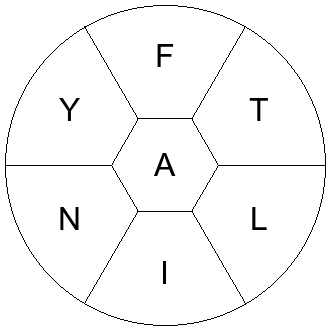
The official answers for today's puzzle are:

Click on the arrow to show the definition.
Click outside the pop-up to close it.


Number of Pangrams: 3

Maximum Puzzle Score: 347

Number of Answers: 68

Points Needed for Genius: 243

Genius requires between 33 and 58 words. You need at least a 7-letter word to reach genius. If you don't get the pangrams, you need 81% of the total points to reach genius. If you get the pangrams, you only need 65% of the remaining points to reach genius.

Other days with this pangram:

The button below will reveal a chart with the number of words by each letter. Red bars indicate that there is a pangram(s) starting with that letter.


How does this puzzle compare to other puzzles?

Today's score of 347 was in the 98th percentile of all puzzles.
The last time there was a score this high was on January 1, 2026.
The highest score ever was 537 on January 22, 2021.
The lowest score ever was 47 on March 27, 2023.

This puzzle's 68 possible answers rank it in the 97th percentile of all puzzles.
The last time there were more answers than this was on December 20, 2025.
The highest number of answers was 81 on June 8, 2019.
The lowest number of answers was 16 on March 27, 2023.

It takes a 7-letter word for genius.
The last time this happened was on January 19, 2026.

Today's puzzle has an average word length of 5.6.
For all Bees, the average word length has been 5.3.


Haven't I seen these letters before?

Hover over a letter to see its first and most recent appearance in the Bee!


Haven't I seen these words before?

The most common words in the Bee are:

  • noon 227
  • loll 210
  • toot 207
  • naan 190
  • nana 190
  • lilt 151
  • till 151
  • tilt 151
  • nene 148
  • tint 145
  • mama 142
  • mamma 142
  • acacia 137
  • acai 137
  • onion 137
  • onto 136
  • toon 136
  • anal 130
  • anon 128
  • olio 124
  • dodo 121
  • tact 121
  • papa 120
  • baba 119
  • boob 117
  • booboo 117
  • poop 117
  • lull 116
  • lulu 116
  • cocci 114
  • call 113
  • calla 113
  • mitt 113
  • mono 112
  • moon 112
  • tutu 112
  • ratatat 111
  • tart 111
  • tartar 111
  • tattoo 111
  • allay 110
  • ally 110
  • attar 110
  • loon 109
  • tatty 109
  • ammo 107
  • momma 107
  • epee 104
  • meme 104
  • peep 104


How long are words in the Bee?

There have been 112,534 answers ever accepted in the Bee - with 10,897 unique words.
Below are the distributions of the lengths of these words.


Valid dictionary words not in today's official answers

You may be wondering why these words aren't here*:

  • aalii
  • affinal
  • alan
  • alanin
  • alant
  • alanyl
  • alfa
  • alif
  • aliya
  • allyl
  • anality
  • anil
  • anilin
  • anility
  • anna
  • anta
  • antifat
  • atalaya
  • atlatl
  • attaint
  • ayaya
  • ayin
  • faff
  • fain
  • fallal
  • fattily
  • fila
  • finnan
  • ilia
  • ilial
  • infall
  • infanta
  • inia
  • lall
  • lallan
  • lanital
  • lati
  • latilla
  • latina
  • latinity
  • lattin
  • layin
  • liana
  • litai
  • lytta
  • naff
  • nala
  • nanna
  • natantly
  • nyala
  • taffia
  • tafia
  • tailfan
  • tailfin
  • tain
  • tala
  • tattily
  • tian
  • titania
  • titian
  • yaff

*Because the New York Times considers them obscure or offensive.

affiant

noun
  1. The individual witness whose statement is contained in an affidavit or sworn deposition.

affinity

noun
  1. A natural attraction or feeling of kinship to a person or thing.
  2. A family relationship through marriage of a relative (e.g. sister-in-law), as opposed to consanguinity (e.g. sister).
  3. A kinsman or kinswoman of a such relationship; one who is affinal.
  4. The fact of and manner in which something is related to another.
  5. Any romantic relationship.
  6. Any passionate love for something.
  7. Resemblances between biological populations; resemblances that suggest that they are of a common origin, type or stock.
  8. Structural resemblances between minerals; resemblances that suggest that they are of a common origin or type.
  9. An attractive force between atoms, or groups of atoms, that contributes towards their forming bonds
  10. The attraction between an antibody and an antigen
  11. Tendency to keep a task running on the same processor in a symmetric multiprocessing operating system to reduce the frequency of cache misses
  12. An automorphism of affine space.

alfalfa

noun
  1. A plant, principally of Medicago sativa, grown as a pasture crop.
  2. A type or breed of this plant.

alit

No Definition Found.

allay

noun
  1. Alleviation; abatement; check.
  2. An alloy.
verb
  1. To make quiet or put at rest; to pacify or appease; to quell; to calm.
  2. To alleviate; to abate; to mitigate.
  3. To subside, abate, become peaceful.
  4. To mix (metals); to mix with a baser metal; to alloy; to deteriorate.
  5. (by extension) To make worse by the introduction of inferior elements.

ally

Etymology 1

noun
  1. A person, group, or state (etc) which is associated with another for a common cause; one united to another by treaty or common purpose; a confederate.
  2. A person, group, concept (etc) which is associated with another as a helper; a supporter; an auxiliary.
  3. Anything akin to something else by structure, etc.
  4. A closely related species, usually within the same family.
  5. A relative; a kinsman.
verb
  1. To unite, or form a connection between, as between families by marriage, or between princes and states by treaty, league, or confederacy.
  2. To connect or form a relation between by similitude, resemblance, friendship, or love.

Etymology 2

noun
  1. A narrow street or passageway, especially one through the middle of a block giving access to the rear of lots or buildings.
  2. The area between the outfielders.
  3. An establishment where bowling is played.
  4. An elongated wooden strip of floor along which a bowling ball is rolled.
  5. The extra area between the sidelines or tramlines on a tennis court that is used for doubles matches.
  6. A walk or passage in a garden or park, bordered by rows of trees or bushes.
  7. A passageway between rows of pews in a church.
  8. (perspective drawing) Any passage having the entrance represented as wider than the exit, so as to give the appearance of length.
  9. The space between two rows of compositors' stands in a printing office.
noun
  1. A glass marble or taw.

anal

noun
  1. Any of the anal scales of a reptile.
  2. Anal sex.
adjective
  1. Of, related to, intended for or involving the anus.
  2. Of the stage in psychosexual development when the child's interest is alleged to be concentrated on the anal region.
  3. Of a person, compulsive and stubborn, obsessed with neatness and accuracy, supposedly from not having progressed beyond the anal stage.
  4. (of a vein) Proximate to the thorax.

anally

No Definition Found.

annal

noun
  1. The record of a single event or item.

anti

noun
  1. A person opposed to a concept or principle.
adjective
  1. Opposed to something.
  2. That has a torsion angle between 90° and 180°
preposition
  1. Alternative form of anti-

atilt

adjective
  1. At an angle from the vertical or horizontal.
adverb
  1. At an angle from the vertical or horizontal; at the point of falling over.
  2. Tilting or as if tilting (charging with a lance, like a knight on horseback in a joust).
preposition
  1. Diagonally over or across.

attain

verb
  1. To gain (an object or desired result).
  2. To reach or come to, by progression or motion; to arrive at (a place, time, state, etc.).
  3. To come or arrive, by motion, growth, bodily exertion, or efforts toward a place, object, state, etc.
  4. To get at the knowledge of.
  5. To reach in excellence or degree.
  6. To reach a person after being behind them.

fail

Etymology 1

noun
  1. Poor quality; substandard workmanship.
  2. A failure (condition of being unsuccessful)
  3. A failure (something incapable of success)
  4. A failure, especially of a financial transaction (a termination of an action).
  5. A failing grade in an academic examination.
verb
  1. To be unsuccessful.
  2. Not to achieve a particular stated goal. (Usage note: The direct object of this word is usually an infinitive.)
  3. To neglect.
  4. Of a machine, etc.: to cease to operate correctly.
  5. To be wanting to, to be insufficient for, to disappoint, to desert.
  6. To receive one or more non-passing grades in academic pursuits.
  7. To give a student a non-passing grade in an academic endeavour.
  8. To miss attaining; to lose.
  9. To be wanting; to fall short; to be or become deficient in any measure or degree up to total absence.
  10. To be affected with want; to come short; to lack; to be deficient or unprovided; used with of.
  11. To fall away; to become diminished; to decline; to decay; to sink.
  12. To deteriorate in respect to vigour, activity, resources, etc.; to become weaker.
  13. To perish; to die; used of a person.
  14. To err in judgment; to be mistaken.
  15. To become unable to meet one's engagements; especially, to be unable to pay one's debts or discharge one's business obligation; to become bankrupt or insolvent.
adjective
  1. That is a failure.

Etymology 2

noun
  1. A piece of turf cut from grassland.

faint

Etymology 1

noun
  1. The act of fainting, syncope.
  2. The state of one who has fainted; a swoon.
adjective
  1. (of a being) Lacking strength; weak; languid; inclined to lose consciousness
  2. Lacking courage, spirit, or energy; cowardly; dejected
  3. Barely perceptible; not bright, or loud, or sharp
  4. Performed, done, or acted, weakly; not exhibiting vigor, strength, or energy
  5. Slight; minimal.

Etymology 2

verb
  1. To lose consciousness through a lack of oxygen or nutrients to the brain, usually as a result of suddenly reduced blood flow (may be caused by emotional trauma, loss of blood or various medical conditions).
  2. To sink into dejection; to lose courage or spirit; to become depressed or despondent.
  3. To decay; to disappear; to vanish.

faintly

adverb
  1. In a faint manner; very quietly or lightly.

fall

Etymology 1

noun
  1. The act of moving to a lower position under the effect of gravity.
  2. A reduction in quantity, pitch, etc.
  3. The time of the year when the leaves typically fall from the trees; autumn; the season of the year between the autumnal equinox and the winter solstice.
  4. A loss of greatness or status.
  5. That which falls or cascades.
  6. A crucial event or circumstance.
  7. A hairpiece for women consisting of long strands of hair on a woven backing, intended primarily to cover hair loss.
  8. Blame or punishment for a failure or misdeed.
  9. The part of the rope of a tackle to which the power is applied in hoisting (usu. plural).
  10. An old Scots unit of measure equal to six ells.
  11. A short, flexible piece of leather forming part of a bullwhip, placed between the thong and the cracker.
  12. The lid, on a piano, that covers the keyboard
verb
  1. (heading) To be moved downwards.
  2. To move downwards.
  3. To happen, to change negatively.
  4. To be allotted to; to arrive through chance, fate, or inheritance.
  5. To diminish; to lessen or lower.
  6. To bring forth.
  7. To issue forth into life; to be brought forth; said of the young of certain animals.
  8. To descend in character or reputation; to become degraded; to sink into vice, error, or sin.
  9. To become ensnared or entrapped; to be worse off than before.
  10. To assume a look of shame or disappointment; to become or appear dejected; said of the face.
  11. To happen; to come to pass; to chance or light (upon).
  12. To begin with haste, ardour, or vehemence; to rush or hurry.
  13. To be dropped or uttered carelessly.
  14. (of a fabric) To hang down (under the influence of gravity).

Etymology 2

noun
  1. The chasing of a hunted whale.

fanny

Etymology 1

noun
  1. The female genitalia.
  2. The buttocks; arguably the most nearly polite of several euphemisms.
  3. Sexual intercourse with a woman.
  4. Women viewed as sexual objects.

Etymology 2

noun
  1. (naval slang) Mess kettle or cooking pot.

fantail

noun
  1. Any of several birds, of the genus Rhipidura, from Asia, Australia and New Zealand.
  2. Any of several domestic varieties of pigeon having a fan-shaped tail.
  3. Any of several goldfish having a large fan-shaped tail.
  4. An overhanging deck at the stern of a ship
  5. A small windmill mounted at right angles to the sails, at the rear of the windmill, used to turn the cap automatically to bring it into the wind.
  6. A brimmed hat with just the back of the brim turned up.

fatal

noun
  1. A fatality; an event that leads to death.
  2. A fatal error; a failure that causes a program to terminate.
adjective
  1. Proceeding from, or appointed by, fate or destiny.
  2. Foreboding death or great disaster.
  3. Causing death or destruction.
  4. Causing a sudden end to the running of a program.

fatality

noun
  1. The state proceeding from destiny; invincible necessity, superior to, and independent of, free and rational control.
  2. Tendency to death, destruction or danger, as if by decree of fate.
  3. That which is decreed by fate or which is fatal; a fatal event.
  4. Death.
  5. An accident that causes death.
  6. A person killed.
  7. A move where one character kills another.

fatally

adverb
  1. In a fatal manner; lethally.
  2. Ultimately, with finality or irrevocability, moving towards the demise of something.
  3. Fatedly; according to the dictates of fate or doom.

fatly

No Definition Found.

fatty

Etymology 1

adjective
  1. Containing, composed of, or consisting of fat.
  2. Like fat; greasy.
  3. Literally or figuratively large.

Etymology 2

noun
  1. An obese person.
  2. A large marijuana cigar; a blunt.

fiat

noun
  1. An arbitrary or authoritative command or order to do something; an effectual decree.
  2. Authorization, permission or (official) sanction.
  3. (English law) A warrant of a judge for certain processes.
  4. (English law) An authority for certain proceedings given by the Lord Chancellor's signature.
verb
  1. (used in academic debate and role-playing games) To make (something) happen.

filial

adjective
  1. Pertaining to or befitting a son or daughter.
  2. Respectful of the duties and attitudes of a son or daughter toward their parents.
  3. Of a generation or generations descending from a specific previous one.

filially

No Definition Found.

final

noun
  1. A final examination; a test or examination given at the end of a term or class; the test that concludes a class.
  2. The last round, game or match in a contest, after which the winner is determined.
  3. A contest that narrows a field of contestants (finalists) to ranked positions, usually in numbered places (1st place/prize, 2nd place/prize, etc.) or a winner and numbered runners-up (1st runner-up, etc.).
  4. The final part of a syllable, the combination of medial and rime in phonetics and phonology.
  5. The tonic or keynote of a Gregorian mode, and hence the final note of any conventional melody played in that mode.
adjective
  1. Last; ultimate.
  2. Conclusive; decisive.
  3. Respecting an end or object to be gained; respecting the purpose or ultimate end in view.
  4. (grammar) Expressing purpose; as in the term final clause.
  5. Word-final, occurring at the end of a word.

finality

noun
  1. The state of being final; the condition from which no further changes occur.

finally

adverb
  1. At the end or conclusion; ultimately.
  2. (sequence) To finish (with); lastly (in the present).
  3. (manner) Definitively, comprehensively.

finial

noun
  1. The knot or bunch of foliage, or foliated ornament, that forms the upper extremity of a pinnacle in Gothic architecture.
  2. Any decorative fitting at the peak of a gable, or on the top of a flagpole, fence post or staircase newel post.

flail

noun
  1. A tool used for threshing, consisting of a long handle with a shorter stick attached with a short piece of chain, thong or similar material.
  2. A weapon which has the (usually spherical) striking part attached to the handle with a flexible joint such as a chain.
verb
  1. To beat using a flail or similar implement.
  2. To wave or swing vigorously
  3. To thresh.
  4. To move like a flail.

flan

Etymology 1

noun
  1. Baked tart with sweet or savoury filling in an open-topped pastry case. (Compare quiche.)
  2. (Belize) A dessert of congealed custard, often topped with caramel, especially popular in Spanish-speaking countries.
  3. A coin die. (Compare planchet.)

Etymology 2

noun
  1. A fan of the U.S. TV series Firefly.

flat

Etymology 1

noun
  1. An area of level ground.
  2. A note played a semitone lower than a natural, denoted by the symbol ♭ placed after the letter representing the note (e.g., B♭) or in front of the note symbol (e.g. ♭♪).
  3. A flat tyre/tire.
  4. (in the plural) A type of ladies' shoes with very low heels.
  5. (in the plural) A type of flat-soled running shoe without spikes.
  6. A thin, broad brush used in oil and watercolor/watercolour painting.
  7. The flat part of something:
  8. A wide, shallow container or pallet.
  9. (mail) A large mail piece measuring at least 8 1/2 by 11 inches, such as catalogs, magazines, and unfolded paper enclosed in large envelopes.
  10. A railroad car without a roof, and whose body is a platform without sides; a platform car or flatcar.
  11. A flat-bottomed boat, without keel, and of small draught.
  12. A subset of n-dimensional space that is congruent to a Euclidean space of lower dimension.
  13. A straw hat, broad-brimmed and low-crowned.
  14. A flat sheet for use on a bed.
  15. A platform on a wheel, upon which emblematic designs etc. are carried in processions.
  16. A horizontal vein or ore deposit auxiliary to a main vein; also, any horizontal portion of a vein not elsewhere horizontal.
  17. A dull fellow; a simpleton.
  18. (technical, theatre) A rectangular wooden structure covered with masonite, lauan, or muslin that depicts a building or other part of a scene, also called backcloth and backdrop.
  19. Any of various hesperiid butterflies that spread their wings open when they land.
  20. An early kind of toy soldier having a flat design.
verb
  1. To make a flat call; to call without raising.
  2. To become flat or flattened; to sink or fall to an even surface.
  3. To fall from the pitch.
  4. To depress in tone, as a musical note; especially, to lower in pitch by half a tone.
  5. To make flat; to flatten; to level.
  6. To render dull, insipid, or spiritless; to depress.
adjective
  1. Having no variations in height.
  2. (voice) Without variations in pitch.
  3. Having small or invisible breasts and/or buttocks.
  4. (note) Lowered by one semitone.
  5. Of a note or voice, lower in pitch than it should be.
  6. (of a tire or other inflated object) Deflated, especially because of a puncture.
  7. Uninteresting.
  8. (of a carbonated drink) With all or most of its carbon dioxide having come out of solution so that the drink no longer fizzes or contains any bubbles.
  9. Lacking acidity without being sweet.
  10. (of a battery) Unable to emit power; dead.
  11. (of a throw) Without spin; spinless.
  12. Lacking liveliness or action; depressed; dull and boring.
  13. Absolute; downright; peremptory.
  14. (of a consonant) sonant; vocal, as distinguished from a sharp (non-sonant) consonant
  15. (grammar) Not having an inflectional ending or sign, such as a noun used as an adjective, or an adjective as an adverb, without the addition of a formative suffix; or an infinitive without the sign "to".
  16. (of a golf club) Having a head at a very obtuse angle to the shaft.
  17. (of certain fruits) Flattening at the ends.
  18. (authorship, especially of a character) Lacking in depth, substance, or believability; underdeveloped; one-dimensional.
  19. Fixed; unvarying.
adverb
  1. So as to be flat.
  2. Bluntly.
  3. (with units of time, distance, etc) Not exceeding.
  4. Completely.
  5. Directly; flatly.
  6. Without allowance for accrued interest.

Etymology 2

noun
  1. An apartment, usually on one level and usually consisting of more than one room.

Etymology 3

verb
  1. To beat or strike; pound
  2. To dash or throw
  3. To dash, rush

flatly

adverb
  1. In a physically flat or level manner.
  2. In a definite manner; in a manner showing complete certainty.
  3. In a manner that shows no emotion.

flay

Etymology 1

noun
  1. A fright; a scare.
  2. Fear; a source of fear; a formidable matter; a fearsome or repellent-looking individual.
verb
  1. To cause to fly; put to flight; drive off (by frightening).
  2. To frighten; scare; terrify.
  3. To be fear-stricken.

Etymology 2

verb
  1. To strip skin off
  2. To lash

inanity

noun
  1. The property of being inane, of lacking material of interest or satisfaction, emptiness.
  2. Something that is inane.

infant

noun
  1. A very young human being, from birth to somewhere between six months and two years of age, needing almost constant care and/or attention.
  2. A minor.
  3. A noble or aristocratic youth.
verb
  1. To bear or bring forth (a child); to produce, in general.

infantility

No Definition Found.

initial

noun
  1. The first letter of a word or a name.
  2. In plural, the first letter of each word of a person's full name considered as a unit.
  3. A distinguished initial letter of a chapter or section of a document.
  4. Onset, part of a syllable that precedes the syllable nucleus in phonetics and phonology.
verb
  1. To sign one's initial(s), as an abbreviated signature.
adjective
  1. Chronologically first, early; of or pertaining to the beginning, cause or origin.
  2. Spatially first, placed at the beginning, in the first position; especially said of the first letter of a word.

initially

adverb
  1. At the beginning.

inlay

noun
  1. The material placed within a different material in the form of a decoration.
  2. A filling for a tooth, made of ceramic or gold to fit the cavity and shape of tooth and cemented into place.
  3. The piece of paper or the booklet inside the case of a CD or DVD
verb
  1. To place (pieces of a foreign material) within another material to form a decorative design.
  2. To place an inlay in a tooth.

lain

Etymology 1

verb
  1. To rest in a horizontal position on a surface.
  2. To be placed or situated.
  3. To abide; to remain for a longer or shorter time; to be in a certain state or condition.
  4. Used with in: to be or exist; to belong or pertain; to have an abiding place; to consist.
  5. Used with with: to have sexual relations with.
  6. Used with on/upon: to be incumbent (on); to be the responsibility of a person.
  7. To lodge; to sleep.
  8. To be still or quiet, like one lying down to rest.
  9. To be sustainable; to be capable of being maintained.

Etymology 2

verb
  1. To conceal, keep quiet about.

laity

noun
  1. People of a church who are not ordained clergy or clerics.
  2. The common man or woman.
  3. The unlearned, untrained or ignorant.

lanai

noun
  1. (Florida) A Hawaiian-style roofed patio.

lantana

noun
  1. Any member of the genus Lantana of perennial verbenas with aromatic flower clusters.

litany

noun
  1. A ritual liturgical prayer in which a series of prayers recited by a leader are alternated with responses from the congregation.
  2. A prolonged or tedious list.

naan

noun
  1. A type of round, flat bread baked in a tandoor popular in South and Central Asian cuisine.

naif

noun
  1. One who is naive.
adjective
  1. Naive.

nail

Etymology 1

noun
  1. The thin, horny plate at the ends of fingers and toes on humans and some other animals.
  2. The basal thickened portion of the anterior wings of certain hemiptera.
  3. The terminal horny plate on the beak of ducks, and other allied birds.
  4. The claw of a bird or other animal.
  5. A spike-shaped metal fastener used for joining wood or similar materials. The nail is generally driven through two or more layers of material by means of impacts from a hammer or other device. It is then held in place by friction.
  6. A round pedestal on which merchants once carried out their business, such as the four nails outside The Exchange, Bristol.
  7. An archaic English unit of length equivalent to 1/20 of an ell or 1/16 of a yard (2 1/4 inches or 5.715 cm).

Etymology 2

verb
  1. To fix (an object) to another object using a nail.
  2. To drive a nail.
  3. To stud or boss with nails, or as if with nails.
  4. To catch.
  5. To expose as a sham.
  6. To accomplish (a task) completely and successfully.
  7. To hit (a target) effectively with some weapon.
  8. Of a male, to engage in sexual intercourse with.
  9. To spike, as a cannon.
  10. To nail down: to make certain, or confirm.

nana

Etymology 1

noun
  1. A banana
  2. A fool

Etymology 2

noun
  1. (term of endearment) one's grandmother
  2. A nanny

nanny

noun
  1. A child's nurse.
  2. A grandmother.
  3. A godmother.
  4. A female goat.
verb
  1. To serve as a nanny.
  2. To treat like a nanny's charges; to coddle.

natal

Etymology 1

adjective
  1. Of or relating to birth.

Etymology 2

adjective
  1. Of or relating to the buttocks.

natality

noun
  1. The ratio of live births in an area to the population of that area; expressed per 1000 population per year.
  2. The human ability to create new ideas, institutions and frameworks out of nothing.

natant

adjective
  1. Floating or swimming (in water)
  2. In a horizontal position, as if swimming

nattily

No Definition Found.

natty

Etymology 1

adjective
  1. Smart and fashionable.

Etymology 2

adjective
  1. Knotty.

Etymology 3

noun
  1. Someone whose muscle gains are natural and not aided by the use of steroids.
  2. A national championship
adjective
  1. Natural, as opposed to steroid enhanced.
  2. National

taffy

noun
  1. A soft, chewy candy made from boiled molasses or brown sugar.
  2. Flattery.

tail

Etymology 1

noun
  1. The caudal appendage of an animal that is attached to its posterior and near the anus.
  2. An object or part of an object resembling a tail in shape, such as the thongs on a cat-o'-nine-tails.
  3. The back, last, lower, or inferior part of anything.
  4. The feathers attached to the pygostyle of a bird.
  5. The tail-end of an object, e.g. the rear of an aircraft's fuselage, containing the tailfin.
  6. The rear structure of an aircraft, the empennage.
  7. The visible stream of dust and gases blown from a comet by the solar wind.
  8. The latter part of a time period or event, or (collectively) persons or objects represented in this part.
  9. The part of a distribution most distant from the mode; as, a long tail.
  10. One who surreptitiously follows another.
  11. The lower order of batsmen in the batting order, usually specialist bowlers.
  12. The lower loop of the letters in the Roman alphabet, as in g, q or y.
  13. (chiefly in the plural) The side of a coin not bearing the head; normally the side on which the monetary value of the coin is indicated; the reverse.
  14. All the last terms of a sequence, from some term on.
  15. The buttocks or backside.
  16. The penis of a person or animal.
  17. Sexual intercourse.
  18. (kayaking) The stern; the back of the kayak.
  19. A train or company of attendants; a retinue.
  20. The distal tendon of a muscle.
  21. A filamentous projection on the tornal section of each hind wing of certain butterflies.
  22. A downy or feathery appendage of certain achens, formed of the permanent elongated style.
  23. A portion of an incision, at its beginning or end, which does not go through the whole thickness of the skin, and is more painful than a complete incision; called also tailing.
  24. One of the strips at the end of a bandage formed by splitting the bandage one or more times.
  25. A rope spliced to the strap of a block, by which it may be lashed to anything.
  26. The part of a note which runs perpendicularly upward or downward from the head; the stem.
  27. A tailing.
  28. The bottom or lower portion of a member or part such as a slate or tile.
  29. A tailcoat.
verb
  1. To follow and observe surreptitiously.
  2. To hold by the end; said of a timber when it rests upon a wall or other support; with in or into
  3. To swing with the stern in a certain direction; said of a vessel at anchor.
  4. To follow or hang to, like a tail; to be attached closely to, as that which can not be evaded.
  5. To pull or draw by the tail.

Etymology 2

noun
  1. Limitation of inheritance to certain heirs.
adjective
  1. Limited; abridged; reduced; curtailed.

taint

Etymology 1

noun
  1. A contamination, decay or putrefaction, especially in food
  2. A mark of disgrace, especially on one's character; blemish
  3. Tincture; hue; colour
  4. Infection; corruption; deprivation
  5. A marker indicating that a variable is unsafe and should be subjected to additional security checks.
verb
  1. To contaminate or corrupt (something) with an external agent, either physically or morally.
  2. To spoil (food) by contamination.
  3. To be infected or corrupted; to be touched by something corrupting.
  4. To be affected with incipient putrefaction.
  5. To mark (a variable) as unsafe, so that operations involving it are subject to additional security checks.
  6. To invalidate (a share capital account) by transferring profits into it.

Etymology 2

noun
  1. A thrust with a lance, which fails of its intended effect.
  2. An injury done to a lance in an encounter, without its being broken; also, a breaking of a lance in an encounter in a dishonorable or unscientific manner.
verb
  1. To damage, as a lance, without breaking it; also, to break, as a lance, but usually in an unknightly or unscientific manner.
  2. To hit or touch lightly, in tilting.
  3. To thrust ineffectually with a lance.

Etymology 3

noun
  1. The perineum.

tali

noun
  1. The bone of the ankle.

tall

noun
  1. (possibly nonstandard) Someone or something that is tall.
adjective
  1. (of a person) Having a vertical extent greater than the average. For example, somebody with a height of over 6 feet would generally be considered to be tall.
  2. (of a building, etc.) Having its top a long way up; having a great vertical (and often greater than horizontal) extent; high.
  3. (of a story) Hard to believe, such as a tall story or a tall tale.
  4. (of a cup of coffee) A cup of coffee smaller than grande, usually 8 ounces.
  5. Obsequious; obedient.
  6. Seemly; suitable; fitting, becoming, comely; attractive, handsome.
  7. Bold; brave; courageous; valiant.
  8. Fine; proper; admirable; great; excellent.

tallit

No Definition Found.

tally

Etymology 1

interjection
  1. Target sighted.

Etymology 2

noun
  1. (by extension) One of two books, sheets of paper, etc., on which corresponding accounts were kept.
  2. (by extension) Any account or score kept by notches or marks, whether on wood or paper, or in a book, especially one kept in duplicate.
  3. One thing made to suit another; a match; a mate.
  4. A notch, mark, or score made on or in a tally; as, to make or earn a score or tally in a game.
  5. A tally shop.
  6. A ribbon on a sailor's cap bearing the name of the ship or the (part of) the navy to which they belong.
  7. A state of cohabitation, living with another individual in an intimate relationship outside of marriage.
noun
  1. A bone, or piece of wood, on which notches or scores are cut, as the marks of number, for account keeping.

Etymology 3

verb
  1. To count something.
  2. To record something by making marks.
  3. To make things correspond or agree with each other.
  4. To keep score.
  5. To correspond or agree.
  6. To check off, as parcels of freight going inboard or outboard.

Etymology 4

adverb
  1. In a tall way; stoutly; with spirit.

tannin

noun
  1. Tannic acid or any of its derivatives.

tatty

Etymology 1

noun
  1. Potato

Etymology 2

adjective
  1. Tattered; dilapidated, distressed, worn-out, torn

Etymology 3

noun
  1. A woven mat or screen hung at a door or window and kept wet to moisten and cool the air as it enters.

tiffany

noun
  1. A kind of gauze, or very thin silk.

titan

noun
  1. Something or someone of very large stature, greatness, or godliness.

antifa

proper noun
  1. A decentralised, radical political movement that opposes fascism.
  2. A local instance of this movement.
noun
  1. Opposition to fascism
noun
  1. A person opposed to the tenets of fascism.
adjective
  1. Opposed to the tenets of fascism; antifa.