Monday, February 09, 2026

Answers to yesterday's Bee

Jump to answers for


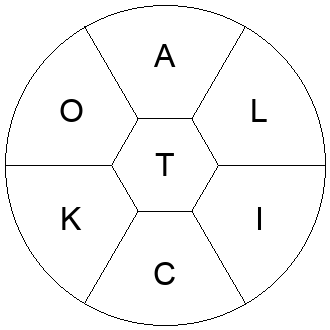
The official answers for today's puzzle are:

Click on the arrow to show the definition.
Click outside the pop-up to close it.


Number of Pangrams: 1

Maximum Puzzle Score: 220

Number of Answers: 58

Points Needed for Genius: 154

Genius requires between 23 and 51 words. You need at least a 7-letter word to reach genius. If you don't get the pangram, you need 75% of the total points to reach genius. If you get the pangram, you only need 68% of the remaining points to reach genius.

Other days with this pangram:

The button below will reveal a chart with the number of words by each letter. Red bars indicate that there is a pangram(s) starting with that letter.


How does this puzzle compare to other puzzles?

Today's score of 220 was in the 72nd percentile of all puzzles.
The last time there was a score this high was on February 06, 2026.
The highest score ever was 537 on January 22, 2021.
The lowest score ever was 47 on March 27, 2023.

This puzzle's 58 possible answers rank it in the 88th percentile of all puzzles.
The last time there were more answers than this was on February 06, 2026.
The highest number of answers was 81 on June 08, 2019.
The lowest number of answers was 16 on March 27, 2023.

It takes a 7-letter word for genius.
The last time this happened was on February 04, 2026.

Today's puzzle has an average word length of 5.1.
For all Bees, the average word length has been 5.3.


Haven't I seen these letters before?

Hover over a letter to see its first and most recent appearance in the Bee!


Haven't I seen these words before?

The most common words in the Bee are:

  • noon 229
  • loll 213
  • toot 210
  • nana 190
  • naan 190
  • tilt 152
  • till 152
  • lilt 152
  • nene 150
  • tint 145
  • mamma 142
  • mama 142
  • onion 138
  • toon 137
  • onto 137
  • acai 137
  • acacia 137
  • anal 130
  • anon 129
  • olio 124
  • dodo 123
  • tact 122
  • papa 122
  • baba 120
  • poop 118
  • lulu 118
  • lull 118
  • booboo 118
  • boob 118
  • cocci 114
  • moon 113
  • mono 113
  • mitt 113
  • calla 113
  • call 113
  • tutu 112
  • tattoo 112
  • tartar 112
  • tart 112
  • ratatat 112
  • loon 111
  • attar 111
  • ally 110
  • allay 110
  • tatty 109
  • momma 107
  • ammo 107
  • roar 105
  • peep 105
  • meme 105


How long are words in the Bee?

There have been 113,387 answers ever accepted in the Bee - with 10,909 unique words.
Below are the distributions of the lengths of these words.


Valid dictionary words not in today's official answers

You may be wondering why these words aren't here*:

  • acta
  • alkalotic
  • atactic
  • atlatl
  • calcitic
  • catalatic
  • catalo
  • cattalo
  • citola
  • clit
  • clitic
  • cloot
  • coact
  • colitic
  • cotta
  • ictic
  • ikat
  • illitic
  • kata
  • koto
  • lactitol
  • latakia
  • lati
  • latilla
  • litai
  • litotic
  • lookit
  • lota
  • loti
  • lotic
  • loto
  • lotta
  • ocicat
  • ocotillo
  • oiticica
  • oolitic
  • otic
  • otitic
  • otto
  • taiko
  • taka
  • tala
  • tallol
  • talooka
  • tical
  • ticktack
  • tictac
  • tictoc
  • tilak
  • titi
  • toco
  • toit
  • tola
  • tolt

*Because the New York Times considers them obscure or offensive.

alit

No Definition Found.

allot

verb
  1. To distribute or apportion by (or as if by) lot.
  2. To assign or designate as a task or for a purpose.

alto

noun
  1. A musical part or section higher than tenor and lower than soprano, formerly the part that performed a countermelody above the tenor or main melody.
  2. A person or musical instrument that performs the alto part.
  3. An alto saxophone

atilt

adjective
  1. At an angle from the vertical or horizontal.
adverb
  1. At an angle from the vertical or horizontal; at the point of falling over.
  2. Tilting or as if tilting (charging with a lance, like a knight on horseback in a joust).
preposition
  1. Diagonally over or across.

atoll

noun
  1. A type of island consisting of a ribbon reef that nearly or entirely surrounds a lagoon and supports, in most cases, one to many islets on the reef platform. Atolls have a unique geology, so not all islands with a reef and a lagoon are atolls

attack

noun
  1. An attempt to cause damage, injury to, or death of opponent or enemy.
  2. An attempt to detract from the worth or credibility of, a person, position, idea, object, or thing, by physical, verbal, emotional, or other assault.
  3. A time in which one attacks; the offence of a battle.
  4. (by extension) The beginning of active operations on anything.
  5. An attempt to exploit a vulnerability in a computer system.
  6. Collectively, the bowlers of a cricket side.
  7. Any contact with the ball other than a serve or block which sends the ball across the plane of the net.
  8. The three attackmen on the field or all the attackmen of a team.
  9. The sudden onset of a disease or condition.
  10. An active episode of a chronic or recurrent disease.
  11. The onset of a musical note, particularly with respect to the strength (and duration) of that onset.
  12. (audio) The amount of time it takes for the volume of an audio signal to go from zero to maximum level (e.g. an audio waveform representing a snare drum hit would feature a very fast attack, whereas that of a wave washing to shore would feature a slow attack).
verb
  1. To apply violent force to someone or something.
  2. To aggressively challenge a person, idea, etc., with words (particularly in newspaper headlines, because it typesets into less space than "criticize" or similar).
  3. To begin to affect; to act upon injuriously or destructively; to begin to decompose or waste.
  4. To deal with something in a direct way; to set to work upon.
  5. To aim balls at the batsman’s wicket.
  6. To set a field, or bowl in a manner designed to get wickets.
  7. To bat aggressively, so as to score runs quickly.
  8. To move forward in an active attempt to score a point, as opposed to trying not to concede.
  9. To accelerate quickly in an attempt to get ahead of the other riders.

attic

noun
  1. The space, often unfinished and with sloped walls, directly below the roof in the uppermost part of a house or other building, generally used for storage or habitation.

cacti

noun
  1. Any member of the family Cactaceae, a family of flowering New World succulent plants suited to a hot, semi-desert climate.
  2. Any succulent plant with a thick fleshy stem bearing spines but no leaves, such as euphorbs.

catcall

Etymology 1

noun
  1. A shout or whistle expressing dislike, especially from a crowd or audience; a jeer, a boo.
  2. A shout, whistle, or comment of a sexual nature, usually made toward a passing woman.
  3. A whistle blown by a theatre-goer to express disapproval.
verb
  1. To make such an exclamation.

Etymology 2

noun
  1. In the Eiffel programming language, a run-time error caused by use of the wrong data type.

cattail

noun
  1. Any of several perennial herbs, of the genus Typha, that have long flat leaves, and grow in marshy places

clot

noun
  1. A thrombus, solidified mass of blood.
  2. A solidified mass of any liquid.
  3. A silly person.
verb
  1. To form a clot or mass.
  2. To cause to clot or form into a mass.

coat

noun
  1. An outer garment covering the upper torso and arms.Wp
  2. A covering of material, such as paint.Wp
  3. The fur or feathers covering an animal's skin.Wp
  4. Canvas painted with thick tar and secured round a mast or bowsprit to prevent water running down the sides into the hold (now made of rubber or leather).
  5. A petticoat.
  6. The habit or vesture of an order of men, indicating the order or office; cloth.
  7. A coat of arms.Wp
  8. A coat card.
verb
  1. To cover with a coating of some material.
  2. To cover like a coat.
  3. To clothe.

coati

noun
  1. Any of several omnivorous mammals, of the genus Nasua or Nasuella, in order Carnivora, that live in the range from southern United States to northern Argentina.

coattail

noun
  1. The flap at the back of a coat that hangs down, sometimes below the waist.
  2. (usually in the plural) Success of a figure, organization or movement that transfers to those who associate with it.
verb
  1. To ride the coattails of.

cockatoo

noun
  1. A bird of the family Cacatuidae with a curved beak and a zygodactyl foot.
  2. A lookout posted during a two-up game, when gambling was illegal.

cocktail

noun
  1. A mixed alcoholic beverage.
  2. A mixture of other substances or things.
  3. A horse, not of pure breed, but having only one eighth or one sixteenth impure blood in its veins.
  4. A mean, half-hearted fellow; a coward.
  5. A species of rove beetle, so called from its habit of elevating the tail.
verb
  1. To adulterate (fuel, etc.) by mixing in other substances.
  2. To treat (a person) to cocktails.
adjective
  1. Ostentatiously lacking in manners.

coital

No Definition Found.

colt

noun
  1. A young male horse.
  2. A young crane (bird).
  3. A youthful or inexperienced person; a novice.
  4. A short piece of rope once used by petty officers as an instrument of punishment.
  5. A young camel or donkey.
verb
  1. To horse; to get with young.
  2. To befool.
  3. To frisk or frolic like a colt; to act licentiously or wantonly.

coot

noun
  1. Any of various aquatic birds of the genus Fulica that are mainly black with a prominent frontal shield on the forehead.
  2. A foolish or eccentric fellow
  3. (with the) A success; something excellent.
  4. Body louse (Pediculus humanus).

illicit

noun
  1. A banned or unlawful item.
adjective
  1. Not approved by law, but not invalid.
  2. Breaking social norms.
  3. Unlawful.

iota

noun
  1. The ninth letter of the Greek alphabet.
  2. A jot; a very small, insignificant quantity.

italic

noun
  1. A typeface in which the letters slant to the right.
  2. An oblique handwriting style, such as used by Italian calligraphers of the Renaissance.
adjective
  1. (of a typeface or font) Designed to resemble a handwriting style developed in Italy in the 16th century.
  2. (of a typeface or font) Having letters that slant or lean to the right; oblique.

kilt

Etymology 1

noun
  1. A traditional Scottish garment, usually worn by men, having roughly the same morphology as a wrap-around skirt, with overlapping front aprons and pleated around the sides and back, and usually made of twill-woven worsted wool with a tartan pattern.
  2. Any Scottish garment from which the above lies in a direct line of descent, such as the philibeg, or the great kilt or belted plaid
  3. A plaid, pleated school uniform skirt sometimes structured as a wrap around, sometimes pleated throughout the entire circumference; also used as boys' wear in 19th century USA.
  4. A variety of non-bifurcated garments made for men and loosely resembling a Scottish kilt, but most often made from different fabrics and not always with tartan plaid designs.
verb
  1. To gather up (skirts) around the body.

Etymology 2

verb
  1. To put to death; to extinguish the life of.
  2. To render inoperative.
  3. To stop, cease or render void; to terminate.
  4. To amaze, exceed, stun or otherwise incapacitate.
  5. To cause great pain, discomfort or distress to.
  6. To produce feelings of dissatisfaction or revulsion in.
  7. To use up or to waste.
  8. To exert an overwhelming effect on.
  9. To overpower, overwhelm or defeat.
  10. To force a company out of business.
  11. To produce intense pain.
  12. To punish severely.
  13. To strike (a ball, etc.) with such force and placement as to make a shot that is impossible to defend against, usually winning a point.
  14. To cause (a ball, etc.) to be out of play, resulting in a stoppage of gameplay.
  15. To succeed with an audience, especially in comedy.
  16. To cause to assume the value zero.
  17. (IRC) To disconnect (a user) involuntarily from the network.
  18. To deadmelt.

lactic

adjective
  1. Of, relating to, or derived from milk
  2. (of fermentation) That produces lactic acid

licit

adjective
  1. Not forbidden by formal or informal rules.
  2. Explicitly established or constituted by law.

lilt

noun
  1. Animated, brisk motion; spirited rhythm; sprightliness.
  2. A lively song or dance; a cheerful tune.
  3. A cheerful or melodious accent when speaking.
verb
  1. To do something rhythmically, with animation and quickness, usually of music.
  2. To sing cheerfully, especially in Gaelic.
  3. To utter with spirit, animation, or gaiety; to sing with spirit and liveliness.

loot

Etymology 1

noun
  1. A kind of scoop or ladle, chiefly used to remove the scum from brine-pans in saltworks.

Etymology 2

noun
  1. The act of plundering.
  2. Plunder, booty, especially from a ransacked city.
  3. Any prize or profit received for free, especially Christmas presents
  4. Items dropped by defeated enemies.
verb
  1. To steal, especially as part of war, riot or other group violence.
  2. To steal from.
  3. To examine the corpse of a fallen enemy for loot.

lotto

noun
  1. A game of chance similar to bingo
  2. A lottery

octal

noun
  1. The number system that uses the eight digits 0, 1, 2, 3, 4, 5, 6, 7.
  2. A digit or value in the octal number system.
adjective
  1. Concerning numbers expressed in octal or mathematical calculations performed using octal.

tacit

adjective
  1. Expressed in silence; implied, but not made explicit; silent.
  2. Not derived from formal principles of reasoning; based on induction rather than deduction.

tack

Etymology 1

noun
  1. A small nail with a flat head.
  2. A thumbtack.
  3. A loose seam used to temporarily fasten pieces of cloth.
  4. The lower corner on the leading edge of a sail relative to the direction of the wind.
  5. A course or heading that enables a sailing vessel to head upwind. See also reach, gybe.
  6. A direction or course of action, especially a new one.
  7. The maneuver by which a sailing vessel turns its bow through the wind so that the wind changes from one side to the other.
  8. The distance a sailing vessel runs between these maneuvers when working to windward; a board.
  9. A rope used to hold in place the foremost lower corners of the courses when the vessel is close-hauled; also, a rope employed to pull the lower corner of a studding sail to the boom.
  10. Any of the various equipment and accessories worn by horses in the course of their use as domesticated animals. Saddles, stirrups, bridles, halters, reins, bits, harnesses, martingales, and breastplates are all forms of horse tack.
  11. The stickiness of a compound, related to its cohesive and adhesive properties.
  12. Food generally; fare, especially of the bread kind.
  13. That which is attached; a supplement; an appendix.
  14. A contract by which the use of a thing is set, or let, for hire; a lease.
  15. Confidence; reliance.

Etymology 2

verb
  1. To nail with a tack (small nail with a flat head).
  2. To sew/stich with a tack (loose seam used to temporarily fasten pieces of cloth).
  3. To maneuver a sailing vessel so that its bow turns through the wind, i.e. the wind changes from one side of the vessel to the other.
  4. To add something as an extra item.
  5. Often paired with "up", to place the tack on a horse.

Etymology 3

noun
  1. A stain; a tache.
  2. A peculiar flavour or taint.

Etymology 4

noun
  1. That which is tacky; something cheap and gaudy.

taco

noun
  1. A Mexican snack food; a small tortilla (soft or hard shelled), with typically some type of meat, rice, beans, cheese, diced vegetables (usually tomatoes and lettuce, as served in the United States, and cilantro, onion, and avocado, as served in México) and salsa.
  2. The vulva.
  3. A yellow stain on a shirt armpit caused by sweat or deodorant.
verb
  1. To fold or cause to buckle in half, similar to the way a taco is folded.

tact

noun
  1. The sense of touch; feeling.
  2. The stroke in beating time.
  3. Sensitive mental touch; special skill or faculty; keen perception or discernment; ready power of appreciating and doing what is required by circumstances; the ability to say the right thing.
  4. A verbal operant which is controlled by a nonverbal stimulus (such as an object, event, or property of an object) and is maintained by nonspecific social reinforcement (praise).
verb
  1. To use a tact (a kind of verbal operant; see noun sense).
noun
  1. A maneuver, or action calculated to achieve some end.
  2. A maneuver used against an enemy.
  3. A sequence of moves that limits the opponent's options and results in an immediate and tangible advantage, typically in the form of material.

tactic

noun
  1. A maneuver, or action calculated to achieve some end.
  2. A maneuver used against an enemy.
  3. A sequence of moves that limits the opponent's options and results in an immediate and tangible advantage, typically in the form of material.
adjective
  1. Tactical; of or relating to the art of military and naval tactics.
  2. Describing a polymer whose repeat units are identical.

tactical

noun
  1. A combinator of proof tactics.
  2. A private war reenactment event involving mock battles or skirmishes.
adjective
  1. Of, or relating to tactics
  2. Of, or relating to military operations that are smaller or more local than strategic ones
  3. Adroit, skilful or ingenious
  4. Having a military appearance, typically with accessories such as a bipod, adjustable stock, detachable magazine or black coloration

tail

Etymology 1

noun
  1. The caudal appendage of an animal that is attached to its posterior and near the anus.
  2. An object or part of an object resembling a tail in shape, such as the thongs on a cat-o'-nine-tails.
  3. The back, last, lower, or inferior part of anything.
  4. The feathers attached to the pygostyle of a bird.
  5. The tail-end of an object, e.g. the rear of an aircraft's fuselage, containing the tailfin.
  6. The rear structure of an aircraft, the empennage.
  7. The visible stream of dust and gases blown from a comet by the solar wind.
  8. The latter part of a time period or event, or (collectively) persons or objects represented in this part.
  9. The part of a distribution most distant from the mode; as, a long tail.
  10. One who surreptitiously follows another.
  11. The lower order of batsmen in the batting order, usually specialist bowlers.
  12. The lower loop of the letters in the Roman alphabet, as in g, q or y.
  13. (chiefly in the plural) The side of a coin not bearing the head; normally the side on which the monetary value of the coin is indicated; the reverse.
  14. All the last terms of a sequence, from some term on.
  15. The buttocks or backside.
  16. The penis of a person or animal.
  17. Sexual intercourse.
  18. (kayaking) The stern; the back of the kayak.
  19. A train or company of attendants; a retinue.
  20. The distal tendon of a muscle.
  21. A filamentous projection on the tornal section of each hind wing of certain butterflies.
  22. A downy or feathery appendage of certain achens, formed of the permanent elongated style.
  23. A portion of an incision, at its beginning or end, which does not go through the whole thickness of the skin, and is more painful than a complete incision; called also tailing.
  24. One of the strips at the end of a bandage formed by splitting the bandage one or more times.
  25. A rope spliced to the strap of a block, by which it may be lashed to anything.
  26. The part of a note which runs perpendicularly upward or downward from the head; the stem.
  27. A tailing.
  28. The bottom or lower portion of a member or part such as a slate or tile.
  29. A tailcoat.
verb
  1. To follow and observe surreptitiously.
  2. To hold by the end; said of a timber when it rests upon a wall or other support; with in or into
  3. To swing with the stern in a certain direction; said of a vessel at anchor.
  4. To follow or hang to, like a tail; to be attached closely to, as that which can not be evaded.
  5. To pull or draw by the tail.

Etymology 2

noun
  1. Limitation of inheritance to certain heirs.
adjective
  1. Limited; abridged; reduced; curtailed.

tailcoat

noun
  1. A formal evening jacket with an extended back panel; a dress coat.
  2. Any coat with similar tails.

talc

noun
  1. Originally a large range of transparent or glistening foliated minerals. Examples include mica, selenite and the hydrated magnesium silicate that the term talc generally has referred to in modern times (see below). Also an item made of such a mineral and depending for its function on the special nature of the mineral (see next). Mediaeval writers adopted the term from the Arabic.
  2. A microscope slide made of a plate of mica, generally in use from the start of modern microscopy until the early nineteenth century, after which glass slides became the standard medium.
  3. A soft mineral, composed of hydrated magnesium silicate, that has a soapy feel and a greenish, whitish, or grayish color, and usually occurs in foliated masses.
  4. Talcum powder.
verb
  1. To apply talc to.

tali

noun
  1. The bone of the ankle.

talk

Etymology 1

verb
  1. To communicate, usually by means of speech.
  2. To discuss; to talk about.
  3. To speak (a certain language).
  4. (chiefly used in progressive tenses) Used to emphasise the importance, size, complexity etc. of the thing mentioned.
  5. To confess, especially implicating others.
  6. To criticize someone for something of which one is guilty oneself.
  7. To gossip; to create scandal.
  8. (chiefly used in progressive tenses) To influence someone to express something, especially a particular stance or viewpoint or in a particular manner.

Etymology 2

noun
  1. A conversation or discussion; usually serious, but informal.
  2. A lecture.
  3. Gossip; rumour.
  4. (preceded by the; often qualified by a following of) A major topic of social discussion.
  5. (preceded by the) A customary conversation by parent(s) or guardian(s) with their (often teenaged) child about a reality of life; in particular:
  6. (not preceded by an article) Empty boasting, promises or claims.
  7. (usually plural) Meeting to discuss a particular matter.

tall

noun
  1. (possibly nonstandard) Someone or something that is tall.
adjective
  1. (of a person) Having a vertical extent greater than the average. For example, somebody with a height of over 6 feet would generally be considered to be tall.
  2. (of a building, etc.) Having its top a long way up; having a great vertical (and often greater than horizontal) extent; high.
  3. (of a story) Hard to believe, such as a tall story or a tall tale.
  4. (of a cup of coffee) A cup of coffee smaller than grande, usually 8 ounces.
  5. Obsequious; obedient.
  6. Seemly; suitable; fitting, becoming, comely; attractive, handsome.
  7. Bold; brave; courageous; valiant.
  8. Fine; proper; admirable; great; excellent.

tallit

No Definition Found.

tattoo

Etymology 1

noun
  1. An image made in the skin with ink and a needle.
  2. A method of decorating the skin by inserting colored substances under the surface with a sharp instrument (usually a solenoid-driven needle).
verb
  1. To apply a tattoo to (someone or something).
  2. To hit the ball hard, as if to figuratively leave a tattoo on the ball.

Etymology 2

noun
  1. A signal played five minutes before taps (lights out).
  2. A signal by drum or bugle ordering soldiers to return to their quarters.
  3. A military display or pageant.
verb
  1. To tap rhythmically on, to drum.

Etymology 3

noun
  1. A breed of pony from India; a pony of that breed.

tick

Etymology 1

noun
  1. A tiny woodland arachnid of the suborder Ixodida.

Etymology 2

noun
  1. A relatively quiet but sharp sound generally made repeatedly by moving machinery.
  2. A mark on any scale of measurement; a unit of measurement.
  3. A jiffy (unit of time defined by basic timer frequency).
  4. A short period of time, particularly a second.
  5. A periodic increment of damage or healing caused by an ongoing status effect.
  6. A mark (✓) made to indicate agreement, correctness or acknowledgement.
  7. A bird seen (or heard) by a birdwatcher, for the first time that day, year, trip, etc., and thus added to a list of observed birds.
  8. The whinchat.
verb
  1. To make a clicking noise similar to the movement of the hands in an analog clock.
  2. To make a tick or checkmark.
  3. To work or operate, especially mechanically.
  4. To strike gently; to pat.
  5. To add a bird to a list of birds that have been seen (or heard).

Etymology 3

noun
  1. Ticking.
  2. A sheet that wraps around a mattress; the cover of a mattress, containing the filling.

Etymology 4

noun
  1. Credit, trust.
verb
  1. To go on trust, or credit.
  2. To give tick; to trust.

Etymology 5

noun
  1. (place names) A goat.

ticktock

noun
  1. The sound of a ticking clock.
  2. A step-by-step account of an event or timeline.

tiki

noun
  1. Carved talisman in humanoid form, common to the cultures of the Pacific Ocean.

tikka

Etymology 1

noun
  1. A marinade made from various aromatic spices usually with a yoghurt base; often used in Indian cuisine prior to grilling in a tandoor.

Etymology 2

noun
  1. A tilak.

till

Etymology 1

preposition
  1. Until; to, up to; as late as (a given time).
  2. To, up to (physically).
  3. To make it possible that.
conjunction
  1. Until, until the time that.

Etymology 2

noun
  1. A cash register.
  2. A removable box within a cash register containing the money.
  3. The contents of a cash register, for example at the beginning or end of the day or of a cashier's shift.
  4. A tray or drawer in a chest.

Etymology 3

verb
  1. To develop so as to improve or prepare for usage; to cultivate (said of knowledge, virtue, mind etc.).
  2. To work or cultivate or plough (soil); to prepare for growing vegetation and crops.
  3. To cultivate soil.
  4. To prepare; to get.

Etymology 4

noun
  1. Glacial drift consisting of a mixture of clay, sand, pebbles and boulders
  2. Manure or other material used to fertilize land

Etymology 5

noun
  1. A vetch; a tare.

tilt

Etymology 1

noun
  1. A slope or inclination.
  2. The inclination of part of the body, such as backbone, pelvis, head, etc.
  3. The controlled vertical movement of a camera, or a device to achieve this.
  4. A jousting contest.
  5. An attempt at something, such as a tilt at public office.
  6. A thrust, as with a lance.
  7. A tilt hammer.
verb
  1. To slope or incline (something); to slant.
  2. (jousting) To charge (at someone) with a lance.
  3. To be at an angle.
  4. To point or thrust a weapon at.
  5. To point or thrust (a weapon).
  6. To forge (something) with a tilt hammer.
  7. To play worse than usual (often as a result of previous bad luck or losses).
  8. (of a machine) To intentionally let the ball fall down to the drain by disabling flippers and most targets, done as a punishment to the player when the machine is nudged too violently or frequently.

Etymology 2

noun
  1. A canvas covering for carts, boats, etc.
  2. Any covering overhead; especially, a tent.
verb
  1. To cover with a tilt, or awning.

toccata

noun
  1. A piece of music (usually for a keyboard instrument) designed to emphasise the dexterity of the performer.

tock

No Definition Found.

toil

noun
  1. Labour, work, especially of a grueling nature.
  2. Trouble, strife.
  3. (usually in plural) A net or snare; any thread, web, or string spread for taking prey.
verb
  1. To labour; work.
  2. To struggle.
  3. To work (something); often with out.
  4. To weary through excessive labour.

toll

Etymology 1

noun
  1. Loss or damage incurred through a disaster.
  2. A fee paid for some liberty or privilege, particularly for the privilege of passing over a bridge or on a highway, or for that of vending goods in a fair, market, etc.
  3. A fee for using any kind of material processing service.
  4. A tollbooth.
  5. A liberty to buy and sell within the bounds of a manor.
  6. A portion of grain taken by a miller as a compensation for grinding.
verb
  1. To impose a fee for the use of.
  2. To levy a toll on (someone or something).
  3. To take as a toll.
  4. To pay a toll or tallage.

Etymology 2

noun
  1. The act or sound of tolling
verb
  1. To ring (a bell) slowly and repeatedly.
  2. To summon by ringing a bell.
  3. To announce by tolling.

Etymology 3

verb
  1. To draw; pull; tug; drag.
  2. To tear in pieces.
  3. To draw; entice; invite; allure.
  4. To lure with bait; tole (especially, fish and animals).

Etymology 4

verb
  1. To take away; to vacate; to annul.
  2. To suspend.

took

verb
  1. To get into one's hands, possession or control, with or without force.
  2. To receive or accept (something) (especially something given or bestowed, awarded, etc).
  3. To remove.
  4. To have sex with.
  5. To defeat (someone or something) in a fight.
  6. To grasp or grip.
  7. To select or choose; to pick.
  8. To adopt (select) as one's own.
  9. To carry or lead (something or someone).
  10. To use as a means of transportation.
  11. To visit; to include in a course of travel.
  12. To obtain for use by payment or lease.
  13. To consume.
  14. To experience, undergo, or endure.
  15. To cause to change to a specified state or condition.
  16. To regard in a specified way.
  17. To conclude or form (a decision or an opinion) in the mind.
  18. To understand (especially in a specified way).
  19. To accept or be given (rightly or wrongly); assume (especially as if by right).
  20. To believe, to accept the statements of.
  21. To assume or suppose; to reckon; to regard or consider.
  22. To draw, derive, or deduce (a meaning from something).
  23. To derive (as a title); to obtain from a source.
  24. To catch or contract (an illness, etc).
  25. To come upon or catch (in a particular state or situation).
  26. To captivate or charm; to gain or secure the interest or affection of.
  27. (of a material) To absorb or be impregnated by (dye, ink, etc); to be susceptible to being treated by (polish, etc).
  28. (of a ship) To let in (water).
  29. To require.
  30. To proceed to fill.
  31. To fill, to use up (time or space).
  32. To avail oneself of.
  33. To practice; perform; execute; carry out; do.
  34. To assume or perform (a form or role).
  35. To bind oneself by.
  36. To move into.
  37. To go into, through, or along.
  38. To have and use one's recourse to.
  39. To ascertain or determine by measurement, examination or inquiry.
  40. To write down; to get in, or as if in, writing.
  41. To make (a photograph, film, or other reproduction of something).
  42. To take a picture, photograph, etc of (a person, scene, etc).
  43. To obtain money from, especially by swindling.
  44. (now chiefly by enrolling in a class or course) To apply oneself to the study of.
  45. To deal with.
  46. To consider in a particular way, or to consider as an example.
  47. To decline to swing at (a pitched ball); to refrain from hitting at, and allow to pass.
  48. To accept as an input to a relation.
  49. To get or accept (something) into one's possession.
  50. To engage, take hold or have effect.
  51. To become; to be affected in a specified way.
  52. (possibly obsolete) To be able to be accurately or beautifully photographed.
  53. An intensifier.
  54. To deliver, bring, give (something) to (someone).
  55. (obsolete outside dialectal and slang) To give or deliver (a blow, to someone); to strike or hit.

tool

noun
  1. A mechanical device intended to make a task easier.
  2. Equipment used in a profession, e.g., tools of the trade.
  3. Something to perform an operation; an instrument; a means.
  4. A piece of software used to develop software or hardware, or to perform low-level operations.
  5. A person or group which is used or controlled, usually unwittingly, by another person or group.
  6. Penis.
  7. (by extension) An obnoxious or uptight person.
verb
  1. To work on or shape with tools, e.g., hand-tooled leather.
  2. To equip with tools.
  3. To work very hard.
  4. To put down another person (possibly in a subtle, hidden way), and in that way to use him or her to meet a goal.
  5. To intentionally attack the ball so that it deflects off a blocker out of bounds.
  6. To drive (a coach or other vehicle).
  7. To carry or convey in a coach or other vehicle.
  8. To travel in a vehicle; to ride or drive.

toot

Etymology 1

noun
  1. The noise of a horn or whistle.
  2. (by extension) A fart; flatus.
  3. Cocaine.
  4. A portion of cocaine that a person snorts.
  5. A spree of drunkness.
  6. (pronounced /tʊt/) Rubbish; tat.
  7. A message on the social networking software Mastodon.
verb
  1. To stand out, or be prominent.
  2. To peep; to look narrowly.
  3. To see; to spy.
  4. To flatulate.
  5. To make the sound of a horn or whistle.
  6. To cause a horn or whistle to make its sound.
  7. To go on a drinking binge.
  8. To snort (a recreational drug).
  9. To post a message on a Mastodon instance (a self-hosted version of the networking software).

Etymology 2

noun
  1. A toilet.

total

noun
  1. An amount obtained by the addition of smaller amounts.
  2. Sum.
verb
  1. To add up; to calculate the sum of.
  2. To equal a total of; to amount to.
  3. To demolish; to wreck completely. (from total loss)
  4. To amount to; to add up to.
adjective
  1. Entire; relating to the whole of something.
  2. (used as an intensifier) Complete; absolute.

toolkit

noun
  1. An assembly of tools.
  2. A set of basic components for developing software.