Wednesday, July 29, 2026

Answers to yesterday's Bee

Jump to answers for


The official answers for today's puzzle are:

Click on the arrow to show the definition.
Click outside the pop-up to close it.


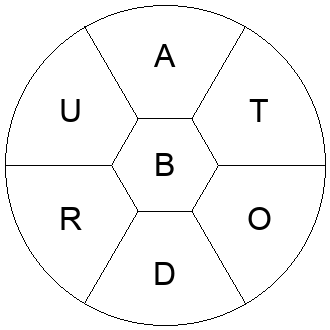
Number of Pangrams: 2

Maximum Puzzle Score: 187

Number of Answers: 48

Points Needed for Genius: 131

Genius requires between 20 and 43 words. You need at least a 6-letter word to reach genius. If you don't get the pangrams, you need 85% of the total points to reach genius. If you get the pangrams, you only need 64% of the remaining points to reach genius.

Other days with this pangram:

The button below will reveal a chart with the number of words by each letter. Red bars indicate that there is a pangram(s) starting with that letter.


How does this puzzle compare to other puzzles?

Today's score of 187 was in the 57th percentile of all puzzles.
The last time there was a score this high was on July 28, 2026.
The highest score ever was 537 on January 22, 2021.
The lowest score ever was 47 on March 27, 2023.

This puzzle's 48 possible answers rank it in the 70th percentile of all puzzles.
The last time there were more answers than this was on July 26, 2026.
The highest number of answers was 81 on June 08, 2019.
The lowest number of answers was 16 on March 27, 2023.

It takes a 6-letter word for genius.
The last time this happened was on July 17, 2026.

Today's puzzle has an average word length of 5.0.
For all Bees, the average word length has been 5.3.


Haven't I seen these letters before?

Hover over a letter to see its first and most recent appearance in the Bee!


Haven't I seen these words before?

The most common words in the Bee are:

  • noon 246
  • loll 228
  • toot 220
  • nana 204
  • naan 204
  • tilt 160
  • till 160
  • lilt 160
  • nene 158
  • mamma 158
  • mama 158
  • tint 156
  • onion 153
  • acai 150
  • acacia 150
  • toon 147
  • onto 147
  • olio 140
  • anon 138
  • anal 136
  • tact 130
  • papa 129
  • baba 128
  • lulu 126
  • lull 126
  • dodo 126
  • mitt 125
  • loon 123
  • calla 122
  • call 122
  • booboo 122
  • boob 122
  • poop 121
  • cocci 120
  • moon 119
  • mono 119
  • tattoo 118
  • tartar 118
  • tart 118
  • ratatat 118
  • attar 117
  • tutu 115
  • ally 114
  • allay 114
  • momma 113
  • cancan 113
  • aria 113
  • ammo 113
  • meme 112
  • tatty 111


How long are words in the Bee?

There have been 121,066 answers ever accepted in the Bee - with 11,073 unique words.
Below are the distributions of the lengths of these words.


Valid dictionary words not in today's official answers

You may be wondering why these words aren't here*:

  • abator
  • abba
  • adbot
  • araroba
  • arbour
  • arroba
  • baboo
  • babu
  • barbot
  • barbut
  • barrator
  • batard
  • batata
  • batt
  • battu
  • boart
  • bobo
  • bora
  • bort
  • bota
  • bott
  • boubou
  • broo
  • brrr
  • bubo
  • bubu
  • bura
  • burd
  • butut
  • darb
  • darbar
  • dobra
  • dobro
  • doob
  • durbar
  • obturator
  • rabat
  • rabato
  • robata
  • rubaboo
  • rubato
  • rubbaboo
  • rubboard
  • rubout
  • tabour
  • tabu

*Because the New York Times considers them obscure or offensive.

abbot

noun
  1. The superior or head of an abbey or monastery.
  2. The pastor and/or administrator of an order, including minor and major orders starting with the minor order of porter.
  3. A layman who received the abbey's revenues, after the closing of the monasteries.
  4. (British slang) A brothel-owner's husband or lover.
  5. (British slang) A ponce; a man employed by a prostitute to find clients, and who may also act as a bodyguard or equivalent to a bouncer.

aboard

adverb
  1. On board; into or within a ship or boat; hence, into or within a railway car.
  2. On or onto a horse, a camel, etc.
  3. On base.
  4. Into a team, group, or company.
  5. Alongside.
preposition
  1. On board of; onto or into a ship, boat, train, plane.
  2. Onto a horse.
  3. Across; athwart; alongside.

abort

Etymology 1

noun
  1. A miscarriage; an untimely birth; an abortion.
  2. The product of a miscarriage; an aborted offspring; an abortion.
  3. An early termination of a mission, action, or procedure in relation to missiles or spacecraft; the craft making such a mission.
  4. The function used to abort a process.
  5. An event involving the abort of a process.

Etymology 2

verb
  1. (now rare outside medicine) To miscarry; to bring forth (non-living) offspring prematurely.
  2. To cause a premature termination of (a fetus); to end a pregnancy before term.
  3. To end prematurely; to stop in the preliminary stages; to turn back.
  4. To stop or fail at something in the preliminary stages.
  5. To become checked in normal development, so as either to remain rudimentary or shrink away wholly; to cease organic growth before maturation; to become sterile.
  6. To cause an organism to develop minimally; to cause rudimentary development to happen; to prevent maturation.
  7. To abandon a mission at any point after the beginning of the mission and prior to its completion.
  8. To terminate a mission involving a missile or rocket; to destroy a missile or rocket prematurely.
  9. To terminate a process prior to completion.

about

adjective
  1. Moving around; astir.
  2. In existence; being in evidence; apparent.
  3. Near; in the vicinity or neighbourhood.
adverb
  1. On all sides; around.
  2. Here and there; around; in one place and another; up and down.
  3. From one place or position to another in succession; indicating repeated movement or activity.
  4. Indicating unproductive or unstructured activity.
  5. Nearly; approximately; with close correspondence in quality, manner, degree, quantity, or time; almost.
  6. Near; in the vicinity.
  7. To a reversed order; half round; facing in the opposite direction; from a contrary point of view.
  8. In succession; one after another; in the course of events.
  9. In circuit; circularly; by a circuitous way; around the outside; in circumference.
preposition
  1. In a circle around; all round; on every side of; on the outside of.
  2. Over or upon different parts of; through or over in various directions; here and there in; to and fro in; throughout.
  3. Indicates that something will happen very soon; indicates a plan or intention to do something.
  4. Concerning; with regard to; on account of; on the subject of; to affect.
  5. Concerned with; engaged in; intent on.
  6. Within or in the immediate neighborhood of; in contiguity or proximity to; near, as to place.
  7. On one's person; nearby the person.
  8. In or near, as in mental faculties or in the possession of; under the control of; at one's command; in one's makeup.

abroad

noun
  1. Countries or lands abroad.
adverb
  1. Beyond the bounds of a country; in foreign countries.
  2. At large; widely; broadly; over a wide space.
  3. Without a certain confine; outside the house; away from one's abode.
  4. Before the public at large; throughout society or the world; here and there; moving without restriction.
  5. Not on target; astray; in error; confused; dazed.
  6. Played elsewhere than one's home grounds.
preposition
  1. Throughout, over.

abut

Etymology 1

verb
  1. To touch by means of a mutual border, edge or end; to border on; to lie adjacent (to); to be contiguous (said of an area of land)
  2. To border upon; be next to; abut on; be adjacent to.

Etymology 2

verb
  1. To lean against on one end; to end on, of a part of a building or wall.

adobo

noun
  1. A Philippine dish in which pork or chicken is slowly cooked in a sauce including soy sauce, vinegar, and crushed garlic.
  2. A marinade.

arbor

Etymology 1

noun
  1. A shady sitting place or pergola usually in a park or garden, surrounded by climbing shrubs, vines or other vegetation.
  2. A grove of trees.

Etymology 2

noun
  1. An axis or shaft supporting a rotating part on a lathe.
  2. A bar for supporting cutting tools.
  3. A spindle of a wheel.

baba

noun
  1. A kind of sponge cake soaked in rum-flavoured syrup.
  2. (esp. among people of East European ancestry) A grandmother.
  3. An old woman, especially a traditional old woman from an eastern European culture.
  4. (esp. among people of Indian ancestry) A father.
  5. (Hinduism, Islam, Sikhism) A holy man, a spiritual leader.
  6. A baby, child.
  7. In baby talk, often used for a variety of words beginning with b, such as bottle or blanket.

baobab

noun
  1. A tree, Adansonia digitata (and similar species), native to tropical Africa, having a broad swollen trunk and edible gourd-like hanging fruits.

barb

Etymology 1

noun
  1. The point that stands backward in an arrow, fishhook, etc., to prevent it from being easily extracted. Hence: Anything which stands out with a sharp point obliquely or crosswise to something else.
  2. A hurtful or disparaging remark.
  3. A beard, or that which resembles it, or grows in the place of it.
  4. Armor for a horse, corrupted from bard.
  5. A horse.
  6. One of the side branches of a feather, which collectively constitute the vane.
  7. Any of various species of freshwater carp-like fish that have barbels and belong to the cyprinid family.
  8. Menticirrhus americanus (Carolina whiting, king whiting, southern kingcroaker, and southern kingfish), found along the Atlantic and Gulf Coasts of the United States.
  9. A hair or bristle ending in a double hook.
  10. A blackish or dun variety of the pigeon, originally brought from Barbary.
  11. A muffler, worn by nuns and mourners.
  12. Paps, or little projections, of the mucous membrane, which mark the opening of the submaxillary glands under the tongue in horses and cattle. The name is mostly applied when the barbs are inflamed and swollen. [Written also barbel and barble.]
  13. A bit for a horse.
  14. A plastic fastener, shaped roughly like a capital I (with serifs), used to attach socks etc. to their packaging.
verb
  1. To furnish with barbs, or with that which will hold or hurt like barbs, as an arrow, fishhook, spear, etc.
  2. To cover a horse in armor, corrupted from bard.
  3. To cut (hair).
  4. To shave or dress the beard of.
  5. To clip; to mow.

Etymology 2

noun
  1. The Barbary horse, a superior breed introduced from Barbary into Spain by the Moors.
  2. A blackish or dun variety of pigeon, originally brought from Barbary.

Etymology 3

noun
  1. A barbiturate.

bard

Etymology 1

noun
  1. A professional poet and singer, like among the ancient Celts, whose occupation was to compose and sing verses in honor of the heroic achievements of princes and brave men.
  2. (by extension) A poet.

Etymology 2

noun
  1. A piece of defensive (or, sometimes, ornamental) armor for a horse's neck, breast, and flanks; a barb. (Often in the plural.)
  2. Defensive armor formerly worn by a man at arms.
  3. A thin slice of fat bacon used to cover any meat or game.
  4. The exterior covering of the trunk and branches of a tree; the rind.
  5. Specifically, Peruvian bark.
verb
  1. To cover a horse in defensive armor.
  2. To cover (meat or game) with a thin slice of fat bacon.

baud

noun
  1. A unit of data transmission symbol rate; the number of signalling events per second.
  2. Bps (bits per second), regardless of how many bits are represented by each symbol.

boar

noun
  1. A wild boar (Sus scrofa), the wild ancestor of the domesticated pig.
  2. A male pig.
  3. A male boar (sense 1).
  4. A male bear.
  5. A male guinea pig.

board

Etymology 1

noun
  1. A relatively long, wide and thin piece of any material, usually wood or similar, often for use in construction or furniture-making.
  2. A device (e.g., switchboard) containing electrical switches and other controls and designed to control lights, sound, telephone connections, etc.
  3. A flat surface with markings for playing a board game.
  4. Short for blackboard, whiteboard, chessboard, surfboard, message board (on the Internet), etc.
  5. A committee that manages the business of an organization, e.g., a board of directors.
  6. Regular meals or the amount paid for them in a place of lodging.
  7. The side of a ship.
  8. The distance a sailing vessel runs between tacks when working to windward.
  9. The wall that surrounds an ice hockey rink, often in plural.
  10. A long, narrow table, like that used in a medieval dining hall.
  11. Paper made thick and stiff like a board, for book covers, etc.; pasteboard.
  12. A level or stage having a particular layout.
  13. A container for holding pre-dealt cards that is used to allow multiple sets of players to play the same cards.
verb
  1. To step or climb onto or otherwise enter a ship, aircraft, train or other conveyance.
  2. To provide someone with meals and lodging, usually in exchange for money.
  3. To receive meals and lodging in exchange for money.
  4. To capture an enemy ship by going alongside and grappling her, then invading her with a boarding party
  5. To obtain meals, or meals and lodgings, statedly for compensation
  6. To approach (someone); to make advances to, accost.
  7. To cover with boards or boarding.
  8. To hit (someone) with a wooden board.
  9. To write something on a board, especially a blackboard or whiteboard.

Etymology 2

noun
  1. A rebound.

boat

noun
  1. A craft used for transportation of goods, fishing, racing, recreational cruising, or military use on or in the water, propelled by oars or outboard motor or inboard motor or by wind.
  2. A full house.
  3. A vehicle, utensil, or dish somewhat resembling a boat in shape.
  4. One of two possible conformations of cyclohexane rings (the other being chair), shaped roughly like a boat.
  5. The refugee boats arriving in Australian waters, and by extension, refugees generally.
verb
  1. To travel by boat.
  2. To transport in a boat.
  3. To place in a boat.

boob

Etymology 1

noun
  1. Idiot, fool.
verb
  1. To behave stupidly; to act like a boob.
  2. To make a mistake
adjective
  1. Idiotic, foolish.

Etymology 2

noun
  1. A breast, especially that of an adult or adolescent human female.

Etymology 3

noun
  1. A prison; jail.

booboo

noun
  1. A mistake or error.
  2. (by or to young children) A minor injury, such as a cut or a bruise.
  3. (by or to young children) Feces.

boor

noun
  1. A peasant.
  2. A Boer, white South African of Dutch or Huguenot descent.
  3. A yokel, country bumpkin.
  4. An uncultured person.

boot

Etymology 1

noun
  1. A heavy shoe that covers part of the leg.
  2. A blow with the foot; a kick.
  3. A flexible cover of rubber or plastic, which may be preformed to a particular shape and used to protect a shaft, lever, switch, or opening from dust, dirt, moisture, etc.
  4. (usually preceded by definite article) A torture device used on the feet or legs, such as a Spanish boot.
  5. A parking enforcement device used to immobilize a car until it can be towed or a fine is paid; a wheel clamp.
  6. A rubber bladder on the leading edge of an aircraft’s wing, which is inflated periodically to remove ice buildup. A deicing boot.
  7. A place at the side of a coach, where attendants rode; also, a low outside place before and behind the body of the coach.
  8. A place for baggage at either end of an old-fashioned stagecoach.
  9. (police) A recently arrived recruit; a rookie.
  10. The luggage storage compartment of a sedan or saloon car.
  11. The act or process of removing or firing someone (give someone the boot).
  12. Unattractive person, ugly woman (usually as "old boot")
  13. A hard plastic case for a long firearm, typically moulded to the shape of the gun and intended for use in a vehicle.
  14. A bobbled ball.
  15. The inflated flag leaf sheath of a wheat plant.
verb
  1. To kick.
  2. To put boots on, especially for riding.
  3. To apply corporal punishment (compare slippering).
  4. To forcibly eject.
  5. To disconnect forcibly; to eject from an online service, conversation, etc.
  6. To vomit.
  7. (criminal slang) To shoot, to kill by gunfire.

Etymology 2

noun
  1. Remedy, amends.
  2. Profit, plunder.
  3. That which is given to make an exchange equal, or to make up for the deficiency of value in one of the things exchanged; compensation; recompense.
  4. Profit; gain; advantage; use.
  5. Repair work; the act of fixing structures or buildings.
  6. A medicinal cure or remedy.
verb
  1. To avail, benefit, profit.
  2. To benefit, to enrich; to give in addition.

Etymology 3

noun
  1. The act or process of bootstrapping; the starting or re-starting of a computing device.
verb
  1. To bootstrap; to start a system, e.g. a computer, by invoking its boot process or bootstrap.

Etymology 4

noun
  1. A bootleg recording.

bout

Etymology 1

noun
  1. A period of something, usually painful or unpleasant.
  2. A boxing match.
  3. An assault (a fencing encounter) at which the score is kept.
  4. A roller derby match.
  5. A fighting competition.
  6. A bulge or widening in a musical instrument, such as either of the two characteristic bulges of a guitar.
  7. The going and returning of a plough, or other implement used to mark the ground and create a headland, across a field.
verb
  1. To contest a bout.

Etymology 2

preposition
  1. In a circle around; all round; on every side of; on the outside of.
  2. Over or upon different parts of; through or over in various directions; here and there in; to and fro in; throughout.
  3. Indicates that something will happen very soon; indicates a plan or intention to do something.
  4. Concerning; with regard to; on account of; on the subject of; to affect.
  5. Concerned with; engaged in; intent on.
  6. Within or in the immediate neighborhood of; in contiguity or proximity to; near, as to place.
  7. On one's person; nearby the person.
  8. In or near, as in mental faculties or in the possession of; under the control of; at one's command; in one's makeup.

brad

noun
  1. A thin, small nail, with a slight projection at the top on one side instead of a head, or occasionally with a small domed head, similar to that of an escutcheon pin.
  2. (elementary school usage) A paper fastener, a fastening device formed of thin, soft metal, such as shim brass, with a round head and a flat, split shank, which is spread after insertion in a hole in a stack of pages, in much the same way as a cotter pin or a split rivet.
verb
  1. To attach using a brad.
  2. To upset the end of a rod inserted in a hole so as to prevent it from being pulled out, as when riveting.

brat

Etymology 1

noun
  1. A child who is regarded as mischievous, unruly, spoiled, or selfish.
  2. A son or daughter (at any age) of an active military service member.
  3. A turbot or flatfish
  4. A rough cloak or ragged garment
  5. A coarse kind of apron for keeping the clothes clean; a bib.
  6. The young of an animal.

Etymology 2

noun
  1. Bratwurst

Etymology 3

noun
  1. A thin bed of coal mixed with pyrites or carbonate of lime.

Etymology 4

noun
  1. Acronym of Born, Raised, And Transferred.

broad

Etymology 1

noun
  1. A shallow lake, one of a number of bodies of water in eastern Norfolk and Suffolk.
  2. A lathe tool for turning down the insides and bottoms of cylinders.
  3. A British gold coin worth 20 shillings, issued by the Commonwealth of England in 1656.
adjective
  1. Wide in extent or scope.
  2. Extended, in the sense of diffused; open; clear; full.
  3. Having a large measure of any thing or quality; unlimited; unrestrained.
  4. Comprehensive; liberal; enlarged.
  5. Plain; evident.
  6. (writing) Unsubtle; obvious.
  7. Free; unrestrained; unconfined.
  8. Gross; coarse; indelicate.
  9. (of an accent) Strongly regional.
  10. (Gaelic languages) Velarized, i.e. not palatalized.

Etymology 2

noun
  1. A prostitute, a woman of loose morals.
  2. (sometimes obsolete) A woman or girl.

brood

noun
  1. The young of certain animals, especially a group of young birds or fowl hatched at one time by the same mother.
  2. The young of any egg-laying creature, especially if produced at the same time.
  3. The eggs and larvae of social insects such as bees, ants and some wasps, especially when gathered together in special brood chambers or combs within the colony.
  4. The children in one family; offspring.
  5. That which is bred or produced; breed; species.
  6. Parentage.
  7. Heavy waste in tin and copper ores.
verb
  1. To keep an egg warm to make it hatch.
  2. To protect (something that is gradually maturing); to foster.
  3. (typically with about or over) To dwell upon moodily and at length, mainly alone.
  4. To be bred.
adjective
  1. Kept or reared for breeding, said of animals.

brut

adjective
  1. (of champagne) very dry, and not sweet

bubba

noun
  1. Brother; used as term of familiar address.
  2. A working-class white male from the southern US, stereotyped as loutish.

burb

noun
  1. (chiefly in the plural) A suburb.

burbot

noun
  1. A freshwater fish, taxonomic name Lota lota, which is similar to the ling and the cusk and spawns in the winter.

burr

Etymology 1

noun
  1. A sharp, pointy object, such as a sliver or splinter.
  2. A bur; a seed pod with sharp features that stick in fur or clothing.
  3. A small piece of material left on an edge after a cutting operation.
  4. A thin flat piece of metal, formed from a sheet by punching; a small washer put on the end of a rivet before it is swaged down.
  5. A broad iron ring on a tilting lance just below the grip, to prevent the hand from slipping.
  6. The ear lobe.
  7. The knot at the bottom of an antler.

Etymology 2

noun
  1. A rough humming sound.
  2. A uvular "r".
verb
  1. To pronounce with a uvular "r".
  2. To make a rough humming sound.

Etymology 3

noun
  1. A metal ring at the top of the hand-rest on a spear.

Etymology 4

noun
  1. A tree growth in which the grain has grown in a deformed manner.
  2. Wood of a mottled veneer, usually cut from such a growth.
  3. A knot or lump in thread or cloth.

burro

noun
  1. A small donkey

butt

Etymology 1

noun
  1. The larger or thicker end of something; the blunt end, in distinction from the sharp or narrow end
  2. The waste end of anything
  3. (generally) An end of something, often distinguished in some way from the other end.
  4. A limit; a bound; a goal; the extreme bound; the end.
verb
  1. To join at the butt, end, or outward extremity; to terminate; to be bounded; to abut.

Etymology 2

noun
  1. A push, thrust, or sudden blow, given by the head; a head butt.
  2. A thrust in fencing.
verb
  1. To strike bluntly, particularly with the head.
  2. To strike bluntly with the head.

Etymology 3

noun
  1. (English units) An English measure of capacity for liquids, containing 126 wine gallons which is one-half tun; equivalent to the pipe.
  2. A wooden cask for storing wine, usually containing 126 gallons.

Etymology 4

noun
  1. Any of various flatfish such as sole, plaice or turbot

Etymology 5

noun
  1. A heavy two-wheeled cart.
  2. A three-wheeled cart resembling a wheelbarrow.

dartboard

noun
  1. A board used as a target for throwing darts.

daub

noun
  1. Excrement or clay used as a bonding material in construction.
  2. A soft coating of mud, plaster etc.
  3. A crude or amateurish painting.
verb
  1. To apply (something) to a surface in hasty or crude strokes.
  2. To paint (a picture, etc.) in a coarse or unskilful manner.
  3. To cover with a specious or deceitful exterior; to disguise; to conceal.
  4. To flatter excessively or grossly.
  5. To put on without taste; to deck gaudily.

doubt

noun
  1. Disbelief or uncertainty (about something); a particular instance of such disbelief or uncertainty.
  2. A point of uncertainty; a query.
verb
  1. To be undecided about; to lack confidence in; to disbelieve, to question.
  2. To harbour suspicion about; suspect.
  3. To anticipate with dread or fear; to apprehend.
  4. To fill with fear; to affright.
  5. To dread, to fear.

drab

No Definition Found.

drub

Etymology 1

noun
  1. Carbonaceous shale; small coal; slate, dross, or rubbish in coal.

Etymology 2

verb
  1. To beat (someone or something) with a stick.
  2. To defeat someone soundly; to annihilate or crush.
  3. To forcefully teach something.
  4. To criticize harshly; to excoriate.

outboard

noun
  1. An outboard motor.
  2. A vessel fitted with an outboard motor.
  3. A studio having outboard gear (compressor, equalizer, etc.).
adjective
  1. Situated outside the hull of a vessel.
  2. Positioned away from the centre line of a ship or aircraft.
  3. Being or relating to an external effects unit such as compressor or equalizer.

robot

noun
  1. A machine built to carry out some complex task or group of tasks by physically moving, especially one which can be programmed.
  2. An intelligent mechanical being designed to look like a human or other creature, and usually made from metal.
  3. A person who does not seem to have any emotions.
  4. A traffic light (from earlier robot policeman).
  5. A theodolite which follows the movements of a prism and can be used by a one-man crew.
  6. A style of dance popular in disco in which the dancer imitates the stiff movements of a stereotypical android robot.

tabard

noun
  1. A silk banner attached to a bugle or trumpet.
  2. A woman's or girl's sleeveless jerkin or loose overgarment.
  3. A sleeveless garment made of coarse cloth formerly worn outdoors by the common people.
  4. A cape or tunic worn by a knight, emblazoned with the coat of arms of his king or queen on the front.
  5. A similar garment officially worn by a herald and emblazoned with his sovereign's coat of arms.

taboo

noun
  1. An inhibition or ban that results from social custom or emotional aversion.
  2. (in Polynesia) Something which may not be used, approached or mentioned because it is sacred.
verb
  1. To mark as taboo.
  2. To ban.
  3. To avoid.
adjective
  1. Excluded or forbidden from use, approach or mention.
  2. Culturally forbidden.

tabor

Etymology 1

noun
  1. A small drum.
verb
  1. To make (a sound) with a tabor.
  2. To strike lightly and frequently.

Etymology 2

noun
  1. A military train of men and wagons; an encampment of such resources.

troubadour

noun
  1. An itinerant composer and performer of songs in medieval Europe; a jongleur or travelling minstrel.

tuba

Etymology 1

noun
  1. A large brass musical instrument, usually in the bass range, played through a vibration of the lips upon the mouthpiece and fingering of the keys.
  2. A type of Roman military trumpet, distinct from the modern tuba.
  3. A large reed stop in organs.

Etymology 2

noun
  1. A Malayan plant whose roots are a significant source of rotenone, Derris malaccensis.

Etymology 3

noun
  1. A reddish palm wine made from coconut or nipa sap.

Etymology 4

noun
  1. A tube or tubular organ.

turbo

Etymology 1

noun
  1. Turbocharger.
  2. Turbojet.
  3. Turbomolecular pump.
  4. Autofire.
verb
  1. To autofire.
adjective
  1. With rapidly-increasing blind levels.
  2. Causing or relating to increased speed.

Etymology 2

noun
  1. A turban shell.

turbot

noun
  1. A species of flatfish native to Europe (Scophthalmus maximus, earlier Psetta maxima).
  2. Any of various other flatfishes of family Scophthalmidae that are found in marine or brackish waters.
  3. Triggerfish, Canthidermis sufflamen.

boba

noun
  1. Short for boba tea.
noun
  1. A small edible ball made primarily from tapioca starch; used in bubble tea.

burrata

noun
  1. A fresh southern Italian cheese similar to creamy mozzarella.